

I am now in my third month at New Oriental Cooking School, and we have moved to the kitchen to learn cooking techniques. One Chinese Cooking technique we have learned is sizing, or glazing, food with a starch and water solution. In Chinese, this is called DăQiàn (打芡).
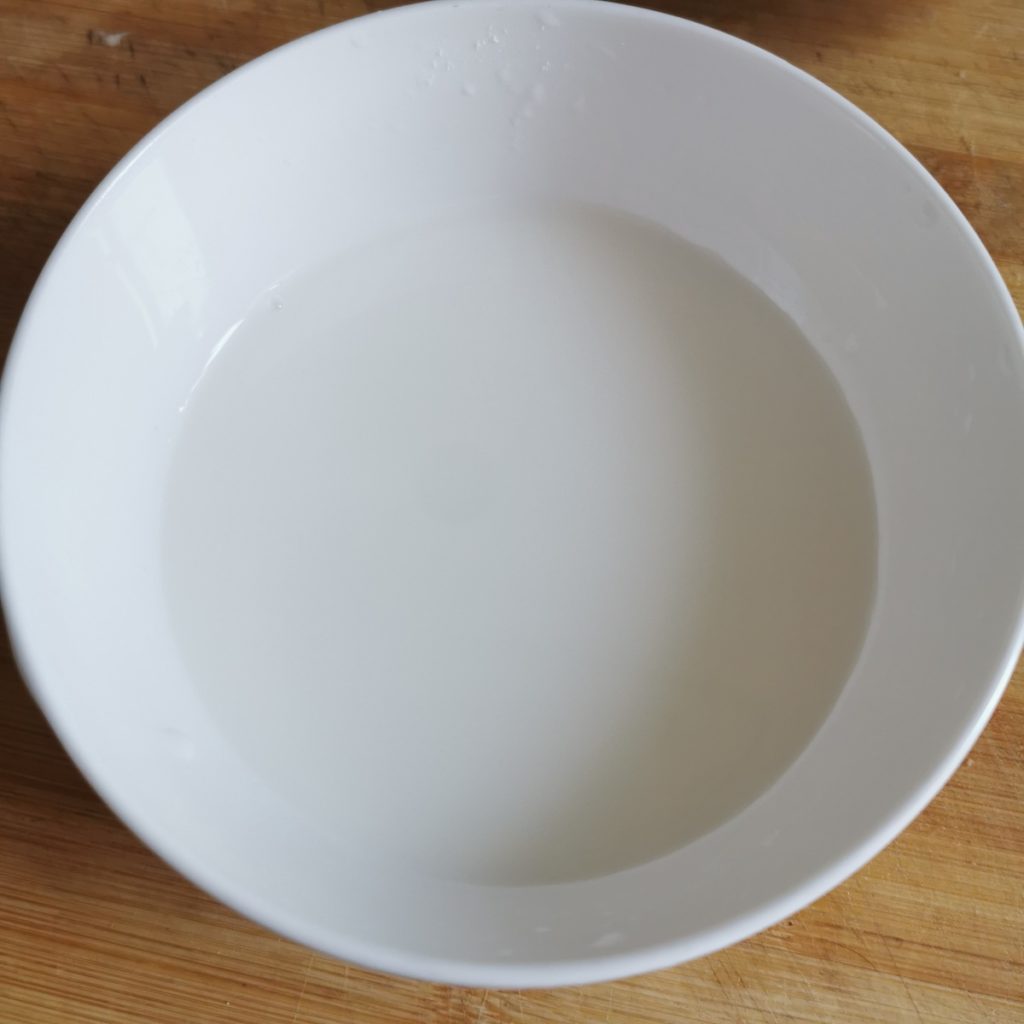
DăQiàn (打芡)
DăQiàn (打芡) means to add a starch-water solution to the dish, just before finishing. This thickens the juices from the food so that they cover the surface of the food, making it smooth. If you do not add enough, the food juices will make a watery broth. If you add too much, the juices will become thick and sticky like mucus.

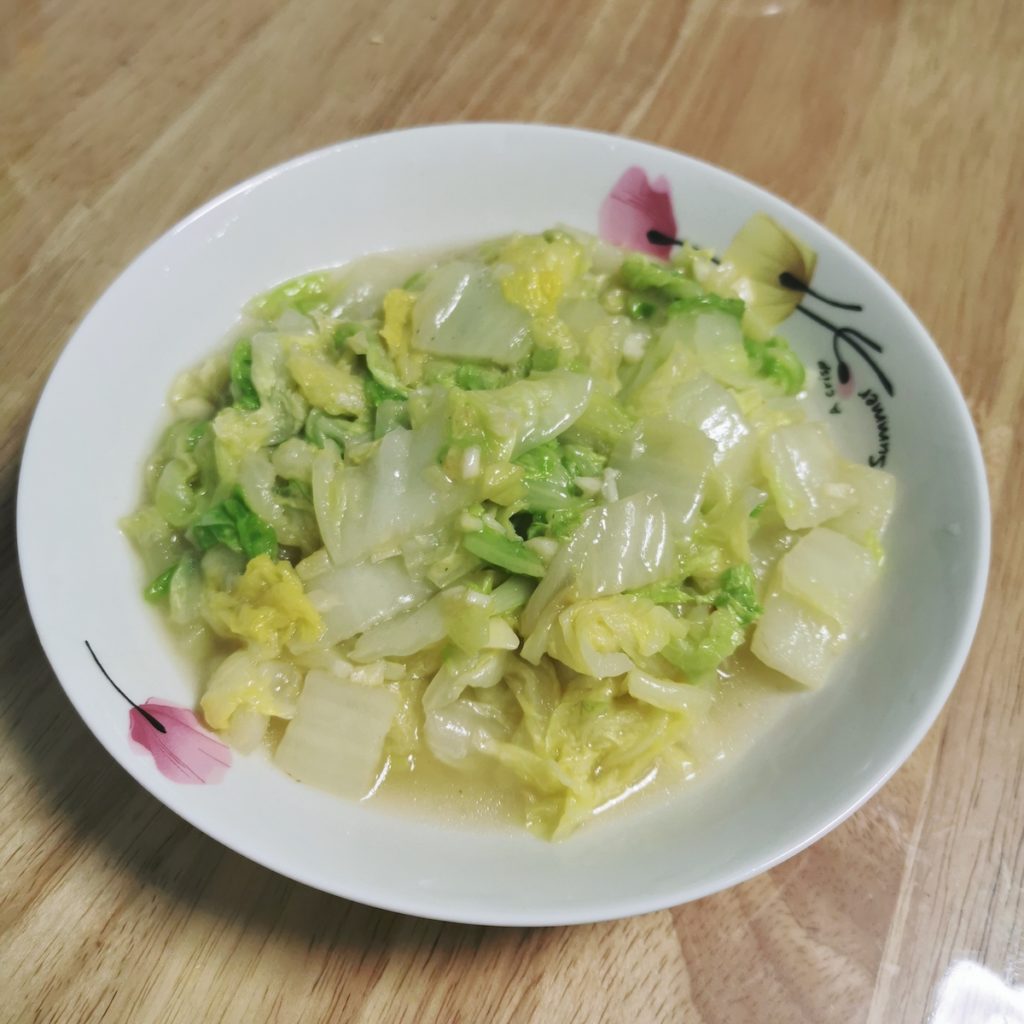

This takes practice and judgment. The chef has to judge the amount of liquid from the food in the wok, and add enough starch-water to produce a satisfactory glaze. The action of the starch solution in the hot wok will be to thicken the sauce, but this does not happen immediately. It is easy to add too much. But cooking with the wok is done with high heat, so the chef must work quickly.
As with making a gravy, the best approach is to add a small amount, and add more until the desired result is achieved. Unlike making a gravy, however, you are not simmering over a low heat. This is why it important to keep the food moving and turning in the wok. You must act quickly, or the food will be overcooked. Vegetables with a lot of moisture, such as leafy vegetables and potatoes, will quickly cook down into a sludge when exposed to the heat for too long.
Quality inspection
When we finish the dishes that we make in class, we place them on a table for teacher Zhu to inspect. He judges the dish by several factors, including:
- Clean: The finished dish should be the original color of the ingredients, kept clean, and there should be no other impurities, such as the ash of the iron pan (black dot-like impurities).
- Taste: The taste should be moderate, with the taste that this dish should have. For example: saltiness and spiciness.
- Texture: the feeling of the food in your mouth, whether soft, chewy, crispy, creamy.
- Shape: The finished dish needs to maintain the original shape of the ingredients. For example: Potato shreds should not be fried for too long or it will become mashed potatoes.
- Glazing (DăQiàn 打芡): The food will be coated and smooth with an even glaze, with no watery broth, but not so thick as to be sticky like snot.
Related article
Do you enjoy My Chinese Home Kitchen?
We enjoy sharing these authentic home recipes with you. To learn more about My Chinese Home Kitchen, please visit our About page.
Please leave a comment, or SUBSCRIBE to our newsletter.
For more of our original videos, visit My Chinese Home Kitchen on YouTube and Rumble.

