

In my learning journey, I have been studying at New Oriental for two months. During these two months, we practiced wok skills and knife skills. On the first day of the third month, November 1st, we started our formal cooking practice. This is a very important beginning. It is the first time I have used a professional kitchen on my way to becoming a chef. In order to better adapt to the cooking techniques I learned at school, I use my home kitchen to practice cooking some simple dishes.
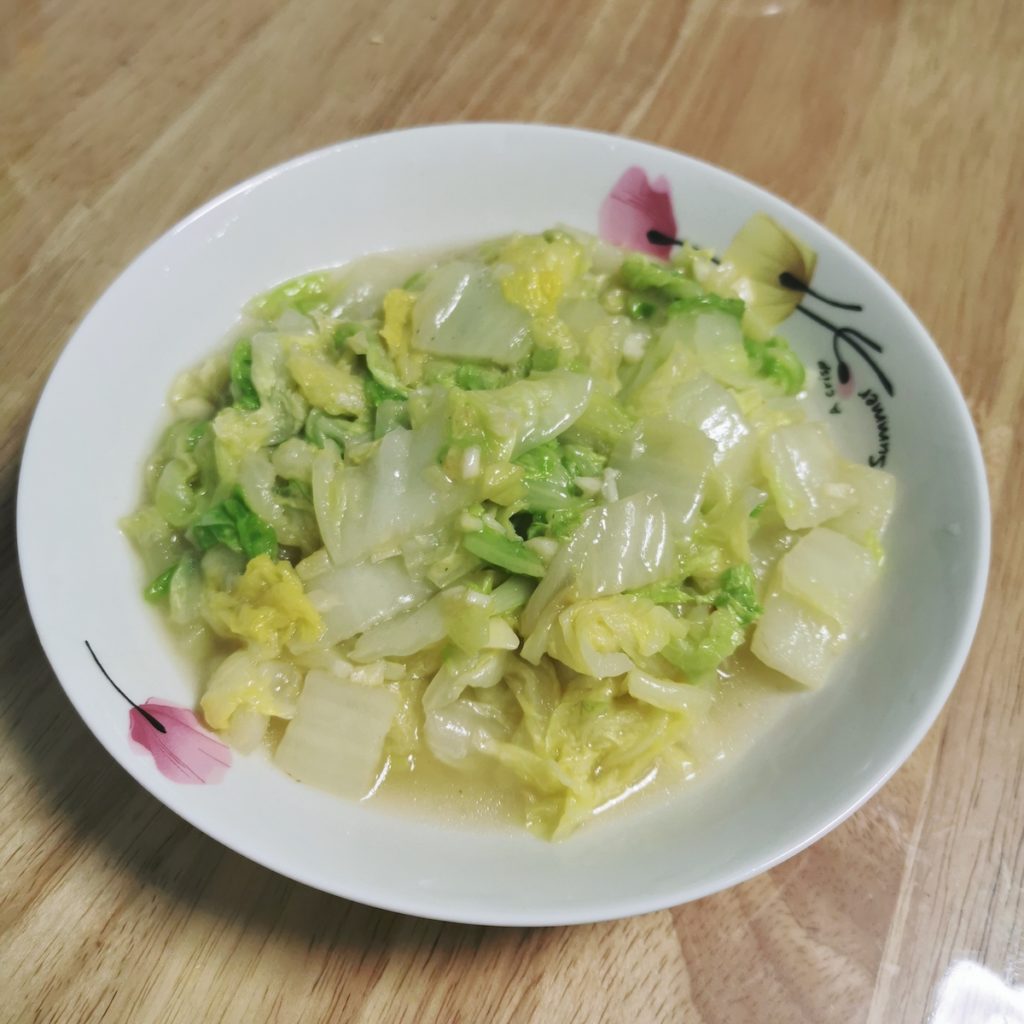
Table of contents
The five aspects of a quality dish
The teacher taught us a simple but difficult dish, garlic cabbage. This dish only needs garlic and cabbage, so the ingredients are very simple. The cooking process is also simple, but when it is used as a finished product, it is evaluated on five aspects: clean, taste, texture, shape, and glazing, called DăQiàn (打芡).
- Clean: The finished dish should be the original color of the ingredients, kept clean, and there should be no other impurities, such as the ash of the iron pan (black dot-like impurities).
- Taste: The taste should be moderate, with the taste that this dish should have. For example: salty and slightly spicy.
- Texture: the feeling of the food in your mouth, whether crispy, chewy, creamy, crumbly, or greasy.
- Shape: The finished dish needs to maintain the original shape of the ingredients. For example: Potato shreds should not be fried for too long or it will become mashed potatoes.
- Glazing or DăQiàn (打芡): This means to add a starch-water solution to the dish, just before finishing. This thickens the juices from the food so that they cover the surface of the food, making it smooth. If you do not add enough, the food juices will make a watery broth. If you add too much, the juices will become thick and sticky like mucus.
The difficulty of a basic dish
Satisfying these five criteria is what makes this dish so difficult, and a good learning exercise. Over-cooking makes the cabbage limp and wilted, destroying the shape and texture. Under-cooking makes the cabbage too crunchy. In addition, we do not want too much or too little liquid in the finished dish, and we need just the right amount of glazing (DăQiàn) on the food. Controlling the heat, and judging the right amount of starch-water and seasoning are essential. This must be done quickly.

Basic dish: Garlic cabbage

Equipment
Ingredients
- ¼ Napa cabbage Chinese cabbage
- 2-3 fresh garlic
- 1 tsp salt 5 ml
- ½ tsp sugar, white (granulated) 3 ml
- ½ tsp MSG (optional) 3 ml
- starch water (1:1 corn starch and water)
- peanut oil, soybean oil, canola oil, vegetable oil, or lard
Instructions
Preparation
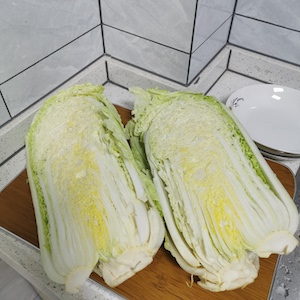
- Prepare a Chinese cabbage, my cabbage is too big, it is 2.7kg. So we only need to cut 1/4 of it.1/4 Napa cabbage

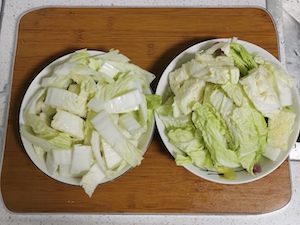
- Chop the cabbage and place the stems and leaves separately.1/4 Napa cabbage

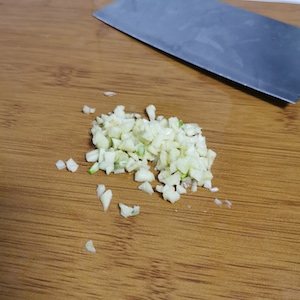
- Chop the garlic cloves.2-3 fresh garlic
Cooking
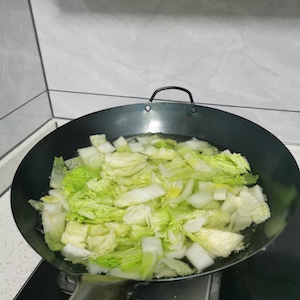
- Add an appropriate amount of water to the wok, put the stems of the cabbage in the cold water, then add the cabbage leaves after the water comes to a boil. Cook for 30 seconds to blanch the cabbage, then remove, rinse and let the cabbage cool. Squeeze out the water.
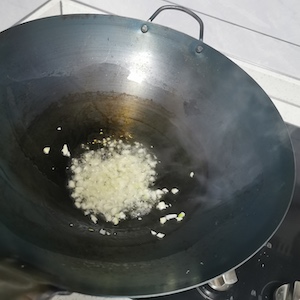
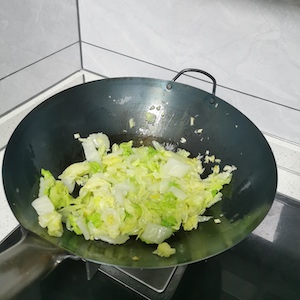
- Pour an appropriate amount of oil into the wok. Add the garlic and stir-fry until you smell the aroma, then pour in the cabbage, stir fry for 20 seconds, and season it to taste.2-3 fresh garlic, 1 tsp salt, ½ tsp sugar, white (granulated), ½ tsp MSG, peanut oil, soybean oil, canola oil, vegetable oil, or lard
- To glaze, add starch-water, stir-fry and add a small amount of oil. Finish.starch water, peanut oil, soybean oil, canola oil, vegetable oil, or lard
Notes
- Pay attention to the cleanliness of the pot. A clean pot can cook clean food.
- Because the thickness of the stems and leaves of cabbage are not the same, blanch the stems first, then add the leaves when the water comes to a boil.
- Squeeze the water of the blanched cabbage, because I did not squeeze the water, the liquid in the finished dish is a bit too much.
- The blanched cabbage does not need to be stir-fried for very long. My teacher said that this is a dish that can be completed within 5 minutes.
Nutrition
How our efforts are evaluated by the teacher
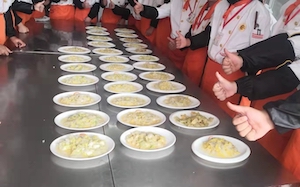
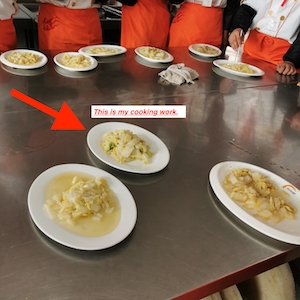
This is the cabbage cooked by the students, presented so the teacher can evaluate all the dishes. When I was cooking in the school kitchen, the cabbage I cooked had no extra soup, and in the end I got a middle grade. This is a good start. I hope I can make progress every day.
Do you enjoy My Chinese Home Kitchen?
We enjoy sharing these authentic home recipes with you. To learn more about My Chinese Home Kitchen, please visit our About page.
Please leave a comment, or SUBSCRIBE to our newsletter.
For more of our original videos, visit My Chinese Home Kitchen on YouTube and Rumble.

