

In Chinese kitchens, there are two types of oil, vegetable oil and animal oil, of which lard is the most common. Lard is made from pig fat. Tallow is made from beef fat or sheep fat. Both lard and tallow were commonly used in American kitchens, until a generation ago. In Chinese home kitchens, we still make our own lard. Making lard at home can help extend your food budget.
While there are now finished products of lard on sale in the online mall, but these vary in quality, and some have been treated with bleaching agents or hydrogenated for longer shelf life. Hydrogenated fats turn into unhealthy trans fats when heated. Pure lard must be refrigerated, so if you see lard out on the store shelf, instead of in a cooler, it has been hydrogenated.
So do you know how lard is made? In fact, the production of lard is not difficult, and you can make it yourself in the home kitchen.
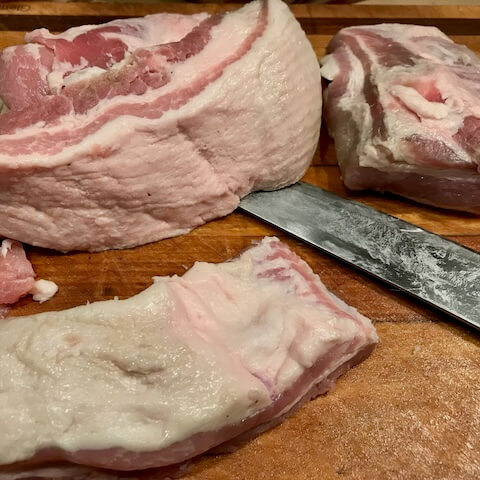
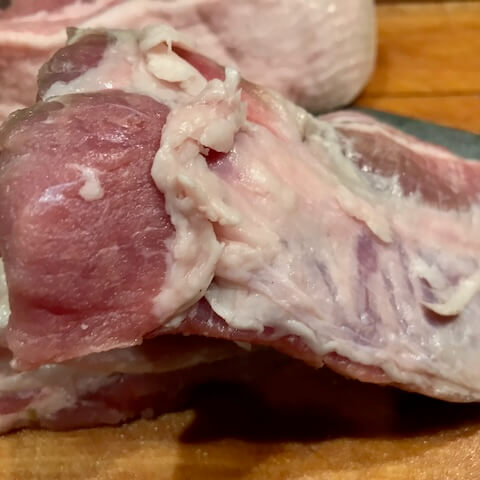

First of all, we need to know which part of the pig we need. Do you think we need a whole big fat pig? No, the answer is, all we need to use is the lumps of ft from the kidneys and loin (“leaf lard”) or the subcutaneous fat (“fatback”).
Types of pork fat and grades of lard
The “leaf lard” from the kidneys and loin yields the highest grade of lard. It has very little pork flavor and is ideal for use in baked goods, and making flaky pie crusts. If you want the best lard for pastries, you will need to request leaf lard from your butcher.
“Fatback” is the hard, subcutaneous fat between the pig’s back skin and muscle and yields the next grade of lard, suitable for cooking and frying. Many of our recipes use pork belly, and you can use the excess fat from a full pork belly (about 10 pounds or 4.5 kg) to make lard for cooking. If you purchase full, or half pork belly, you will want to cut it into smaller pieces of about 1 lb (450 g) for individual recipes, and store the rest in the refrigerator or freezer. When you cut the whole belly into smaller pieces, trim away the hunks of fat along the edges, and use this to make lard.
The least desirable fats are the fat surrounding the viscera.
Making Lard at Home
Equipment
- 1 large saucepan
Materials
- pork fat
Instructions
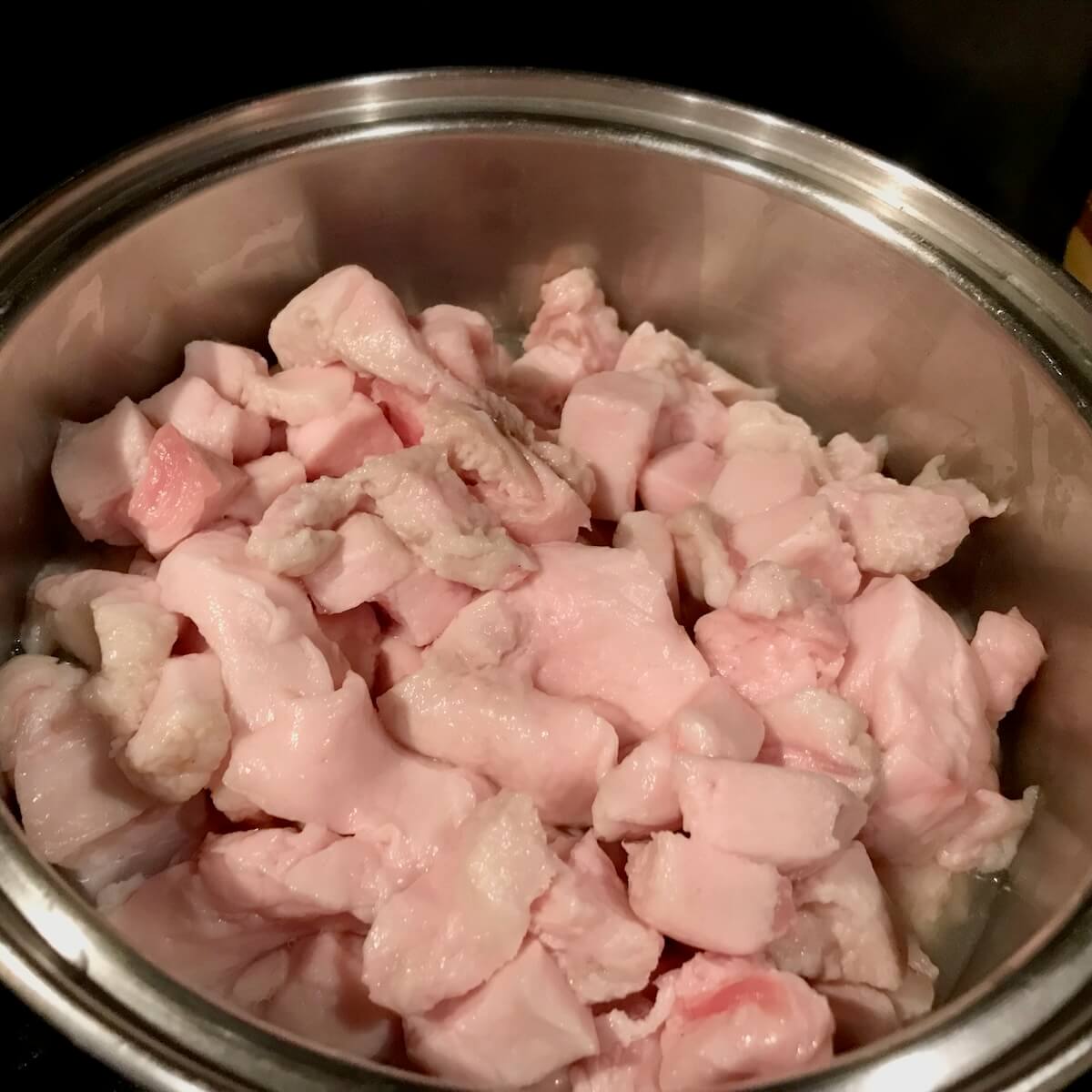
- After washing a whole piece of fat with water, cut it into 2-3cm (1 inch) blocks.
- Put the cut lumps of fat into the saucepan (do not use a wok, use a deep pot).

- Add a small bowl of water to the pot and mix well with the fat (it depends on the amount of oil you need to refine, you don’t need to use a lot of water).
- Use high heat to boil.
- After bringing the water to a boil, reduce the heat to simmer.
- Stir slightly to heat the oil evenly (no need to stir after being heated evenly).
- When the remaining pieces of meat in the pot shrink into small yellow pieces, all water is boiled off, and the melted fat appears yellow in color, remove the pot from the heat. Be careful not to overcook (do not let it smoke). Be careful that the browned pieces do not burn on the bottom of the pan.
- Use fine cheesecloth over a heat proof container to strain the hot liquid fat. Be careful, the fat is hot and will burn you.
- Pour the hot oil into a storage container after cooling, and you are finished.


Notes
- Water is added to prevent the meat from being burnt. The water will boil off while the fat cooks down. As the skin and meat pieces begin to brown, watch that they do not burn.
- Hot oil may spill out of the pot during the lard cooking process, be careful.
- If the fat has skin (or rind) attached, you must separate the pig skin from the fat: frying the skin in the oil will make it pop and sizzle, splashing hot lard!
- The rendered oil will be very hot, and it can stick to skin causing burns, let the oil cool before pouring it into the storage container!
Is lard healthy?
My sister likes to cook with lard very much. She always makes her own lard at home. Lard is high in calories and high in vitamin A and vitamin D, and contains vitamin E, zinc and selenium. If my sister does not eat lard for a long time, she will feel dizzy and fatigued. In a certain sense, lard provides some body functions for my sister. Lard also is about 40% saturated fat, less than butter, and more than olive oil. Lard contains heart healthy oleic acid (also found in olive oil). Pure lard, such as the homemade variety, is also free of trans fats. (Note: the blocks of lard on the room-temperature supermarket shelf are hydrogenated, thus have trans fats.)
One hundred grams of lard contains 39 grams of saturated fats, 45 grams of monounsaturated fats, and 11 grams of polyunsaturated fats. Further, lard has a relatively high smoke point of 375 F (190 C), making it ideal for frying. Lard is a healthier alternative to vegetable shortening, which is hydrogenated and therefore high in trans fats. Natural animal fats are also popular with low-carbohydrate and ketogenic diets.
Most of the medical literature from sites like the American Heart Association, Cleveland Clinic, Mayo Clinic, and WebMD, advise against use of lard, but these sites also advocate the use of other oils that are increasingly linked to inflammation, autoimmune disorders, and other health problems. Further, these sites emphasize the saturated fat content of lard, but neglect to mention the much higher monounsaturated fat content of lard (their primary justification for advocating seed oils like peanut and canola). Finally, these sites recite the old fear that the cholesterol in lard will cause high cholesterol in the blood, while they also have more recent articles debunking the notion that foods high in cholesterol affect blood cholesterol levels:
But evidence shows people no longer have to be concerned about eating foods that are high in cholesterol. What’s changed is that many researchers and physicians believe that eating cholesterol-rich foods such as eggs may not affect the cholesterol that is in your blood.
https://health.clevelandclinic.org/why-you-should-no-longer-worry-about-cholesterol-in-food
Health News does state that “Unsaturated fats are healthier choices compared to lard. However, there is no health concern if you consume lard in moderation as a part of a healthy and balanced diet.” A 2013 article in the Toronto Star also presents a more balanced view of lard in the diet.
We here at My Chinese Home Kitchen are not doctors, so we don’t offer medical advice. Most of the health issues in the American diet come from the excess consumption of processed and fried foods. Home cooking with meat and vegetables, eliminating manufactured foods, and eating a more natural and balanced diet is generally considered healthier by all sources. Consult your doctor and do your own research when making dietary choices.
Related articles
Do you enjoy My Chinese Home Kitchen?
We enjoy sharing these authentic home recipes with you. My Chinese Home Kitchen is a labor of love.
Please tell your friends about us!
Learn more about My Chinese Home Kitchen at our About page.
Please leave a comment, or SUBSCRIBE to our newsletter.
For more of our original videos, visit My Chinese Home Kitchen on YouTube and Rumble.

