

Guangxi is a place with ethnic characteristics, where one of China’s largest ethnic minorities, the Zhuang people, live. What we are talking about today is the special cuisine of the Zhuang nationality: five-color glutinous rice. When you read the article on March 3, you may be curious and ask: “Five-color glutinous rice? What is that? How does rice have such a rich color? Is the color added? Is that healthy?”
Good question, let me tell you the answer next!
The colors of the five-color glutinous rice are yellow, purple, red, black, and white. Among them, white is the natural color. The other four colors are all dyed with local ingredients.
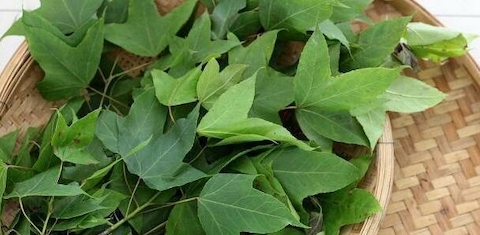
To dye the glutinous rice, we use round leaf red and blue grass, long leaf red and blue grass, maple leaves, and turmeric.
How five-color glutinous rice is prepared:

The above is the traditional five-color glutinous rice. Now, people in Guangxi also use other plants to obtain various colors, such as blue and green. If you like other colors, if you have plants of other colors, of course, you can make rice in various colors.
Round leaf red blue grass and long leaf red blue grass are red and blue grasses of the same species but with different leaf shapes. The leaves are long, dark in color, and the color after cooking is purple. The leaves are round and light in color, and the color after making is red.
Long-leaf red and blue grass:

Round leaf red and blue grass:

Maple Leaf:
Turmeric:

Some trivia: red and blue grass is a Chinese herbal medicine. In Chinese medicine, it is used to reduce inflammation and relieve diarrhea, clear away heat and detoxify. Some people think that it is also helpful for women during menstruation, and preventing the occurrence of viruses and colds in the human body. After a cold, drinking some red and blue herb soup may relieve cold symptoms. Although it is not toxic, you need to pay attention to the amount when using it and not over-eaten.
Maple leaves are not only ornamental plants, but also medicinal plants. In traditional Chinese medicine it is mainly used for rheumatism.
Turmeric can be used for sterilization in Chinese medicine. Its role is to promote bile secretion and enhance gallbladder contraction. However, it is prohibited for pregnant women and those with blood deficiency.
If you are allergic to a certain kind of plant or are taboo people, please do not use this plant, you can use other plants that can make colors for cooking. Please note: this information is presented for cultural purposes only, and is not to be regarded as medical advice or scientific claim. Consult your physician for proper medical care.
Do you enjoy My Chinese Home Kitchen?
We enjoy sharing these authentic home recipes with you. To learn more about My Chinese Home Kitchen, please visit our About page.
Please leave a comment, or SUBSCRIBE to our newsletter.
For more of our original videos, visit My Chinese Home Kitchen on YouTube and Rumble.


The Zhuang people (壮族) are not ONE of China’s largest ethnic minorities. They are by far THE largest minority.
Ken – Liuzhou, Guangxi