


Differences between North and South
We all know that eating zongzi during the Dragon Boat Festival is a traditional Chinese custom. Zongzi is a Chinese delicacy, which has become popular in other countries. The method of making zongzi varies from place to place, and each place has its own characteristics. The different methods of making zongzi in the south and north of China are also controversial in China. The people of the South and the North discuss these differences in a mocking tone.
Southern Zongzi
I’m from southern China, and the zongzi we eat during the dragon boat festival are salty. In my hometown, it is made like this:
- Alkali is added to the soaked glutinous rice to make the cooked glutinous rice yellow.
- Add salt to the glutinous rice to taste.
- Cut the pork into strips and marinate to make the stuffing for zongzi.
- Wash the Indocalamus leaf.
- Put some glutinous rice on two flat ruo leaves, spread the pork on the glutinous rice, add the soaked and peeled mung beans, and then spread a layer of glutinous rice, wrap them into a long strip or three-dimensional with ruo leaves triangle.
- Then wrap it with thin thread. Add water to a large pot, put the zongzi in the pot and cook for several hours until the chopsticks can penetrate the zongzi, which means it is cooked.
When I grew up, I learned that southern rice dumplings are not only made of pork. I heard many flavors of zongzi, such as chestnut zongzi, and mushroom pork zongzi. Among the most popular are sausage dumplings and salted egg yolk dumplings. The method of preparation is the same, except that the fillings used are different. In some places, various side dishes are added to the rice dumplings, such as the various beans that I did not know the name of when I was a kid.
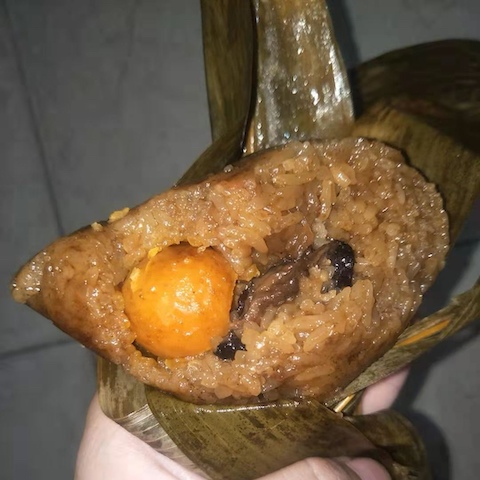
Zongzi from the North
The rice dumplings in the north are generally triangular in shape, and their taste is sweeter. They rarely include meat as fillings. Northern zongzi typically include bean paste or red dates as the main ingredient, or some preserved fruits. The production method is not very different from that in the south. Both use glutinous rice, but the filling is completely different. Northerners usually make red bean dumplings, candied date dumplings, and red bean paste dumplings. These fillings are sweet, but the glutinous rice has no seasoning added, so you need to dip it in sugar when you eat northern zongzi.
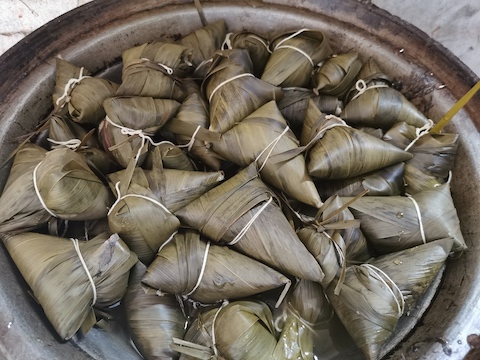

Zongzi leaves
Regarding the leaves for making zongzi, southerners generally use rue leaves or bamboo leaves, which are usually wider. Northerners generally use reed leaves, which are relatively slender.
North versus South
When I first heard about sweet rice dumplings, I was surprised. I couldn’t imagine the taste of sweet rice dumplings. I think the salty rice dumplings in the south are delicious, but when I came to the north, I tasted the sweet rice dumplings and I accepted its taste. Both salty and sweet dumplings have their own specialties.
Every year when the Dragon Boat Festival comes, netizens in the north and south of China will make fun of them on the Internet. Southerners will say: “I can’t believe that there will be sweet rice dumplings in this world. I can’t understand it. I can’t let it enter me. In the stomach”. Northerners would say: “Are you kidding me? Add meat filling to glutinous rice? This is really a strange taste, and such a combination is simply incomprehensible.” Although such “arguing” may seem unfriendly, it has become a habit of netizens. There may be people who cannot accept each other’s tastes. However, most netizens just ridicule and do not mean to belittle them. I am a southerner, but I accepted sweet dumplings and started to like them. I believe there are people in northern China who like salty rice dumplings.
The world is full of differences. We cannot persuade ourselves to accept what we cannot understand, but we can respect everyone’s choices and ideas. Just like the zongzi during the Dragon Boat Festival: although the taste is different from what we are familiar with, it does not prevent us from trying new and delicious food. We can see sweet rice dumplings on the shelves of supermarkets in the south, and salty rice dumplings on the shelves of supermarkets in the north.
Do you enjoy My Chinese Home Kitchen?
We enjoy sharing these authentic home recipes with you. To learn more about My Chinese Home Kitchen, please visit our About page.
Please leave a comment, or SUBSCRIBE to our newsletter.
For more of our original videos, visit My Chinese Home Kitchen on YouTube and Rumble.

