

Lard, which is made from rendered pork fat, is an essential ingredient in Chinese cooking. Many Sichuan chefs use a 50-50 combination of caiziyou (rapeseed oil low in erucic acid) oil and lard when cooking. So, read on to learn how to save the pork fat from cooking our recipes to use as homemade lard.
NOTE: Nothing in this article should be considered medical or nutritional advice. Consult your medical professional for specific advice. We do provide links to US Department of Agriculture and Wikipedia so that you can do your own research.
Storing pork fat for use as lard
- Choose a food safe, heat proof container. Some use a glass jar. I prefer a number 10 can.
- Then cover the can with several layers of cheesecloth.
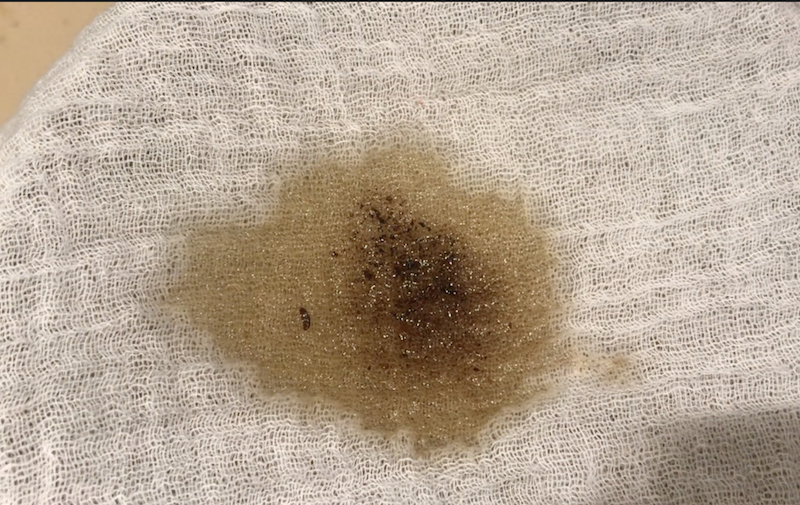
- Next, pour the hot fat from your wok or pan into the center of the cheesecloth.
- Let it stand for a few minutes while the fat filters through, into the can.
- The cheesecloth filters the browned bits of meat, yielding clean white lard when cooled.



Is homemade lard healthy?
With the introduction of vegetable shortening 100 years ago, lard fell into disfavor for baking pastries and frying foods. The debate still rages about the health benefits and risks of various types of fats. However, there is general agreement that hydrogenated and trans fats are to be avoided.
Lard is lower in saturated fat than butter, and has some healthy nutritional qualities, including several essential vitamins and minerals. Naturally rendered lard is free of trans fats, too.
Vegetable shortening or lard?
Vegetable shortening is hydrogenated to make it solid at room temperature. Hydrogenated fat turns into trans fat when cooking. Every source I consulted for this article agrees that trans fats are unhealthy. So lard is once again gaining favor as a cooking fat.
Many professional chefs prefer lard when making pie and pastry crusts. The structure of the fat crystals in lard are ideal for making flaky crusts.
When you cook pork for our recipes, you will get excess pork fat in your pan. This is especially true with dishes that use pork butt or pork belly. With these simple steps, it is easy to save this excess rendered pork fat for cooking.
Why save bacon or pork fat for cooking?
You can purchase lard in your grocery store. However, in recent years, lard has moved from the cooler to the baking section shelves. Thus, avoid this lard, as it is hydrogenated. It yields trans fats when cooking. Pure lard turns rancid at room temperature.
Rendering your own lard at home is healthier and cheaper than buying lard. With all the pork used in Chinese cooking, you will end up with a lot of rendered fat that you must discard if you do not save it as lard for cooking.
Bacon is cured, and contains nitrites, and often has flavorings added. These flavorings can give a taste to bacon fat. If you save both bacon grease and pork fat, consider storing them in separate containers, and use the pork fat lard with your Chinese recipes.
Never pour fat or used cooking oil down your sink drain
If you choose not to save your pork fat for cooking, dispose of it in the garbage, or according to local regulations. Never pour these fats down your kitchen drain. They congeal in the plumbing and will completely block the pipes over time, leading to potentially expensive repairs.
External sources for research on bacon and pork fat
- Wikipedia article on lard, including nutrition information and comparison with other fats and cooking oils
- US Department of Agriculture analysis of Animal fat, bacon grease
- US Department of Agriculture analysis of Pork, bacon, rendered fat, cooked
- US Department of Agriculture analysis of Pork, fresh, separable fat, cooked
Related articles
Do you enjoy My Chinese Home Kitchen?
We enjoy sharing these authentic home recipes with you. To learn more about My Chinese Home Kitchen, please visit our About page.
Please leave a comment, or SUBSCRIBE to our newsletter.
For more of our original videos, visit My Chinese Home Kitchen on YouTube and Rumble.

