

I grew up on a farm, but I left the world of family dairy farms back in the 1980s. In China, people in the rural areas are a bit closer to the farm, as modernization is a more recent phenomenon there. During this Spring Festival, Jing and her sister butchered and barbecued a chicken for a family dinner. I haven’t butchered a chicken since 1988, but there was a time in my life when backyard poultry provided meat and fresh eggs at home for my kitchen too. Sometimes it seems life moves in circles. For the past 20 years or so, there have been hobbyists and natural food enthusiasts adding small flocks of chickens to their yard. Even in cities, people are keeping chickens. Now, with the cost of eggs up 49%, keeping chickens is becoming a cost-effective way for families to have fresh eggs at home.
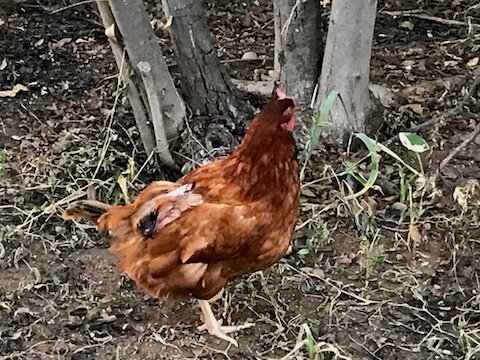
Recently I was adopted by a stray chicken, shown here in her debut music video. My neighbors have a backyard poultry flock, and she decided to leave their flock and move into my yard. When she arrived in September, she was missing most of her tail feathers, and a cat had scratched her back and stripped off a few feathers. Her comb was pale, a sign of stress, and even though she was treated like a pet by the neighbors, neither they nor I could get near enough to catch her.
Types of chickens
There are two main types of chickens: those bred for meat, and those bred for eggs. The chicken breeds bred for meat are called broilers. They have been bred to gain muscle mass quickly, so as to be ready for slaughter as soon as possible (thus requiring less grain). The chicken breeds bred for laying eggs are called layers. Most backyard flocks are comprised of layer breeds, because people want the eggs.
Broilers are bred to gain mass quickly, and then be harvested while young. If you are seeking poultry for meat, you’ll want to order chicks from a broiler breed, which can be mature enough to harvest in as little as 8-10 weeks, or a dual purpose breed, which take longer, up to 20 weeks to reach maturity. To feed a family with chicken each week would take quite a flock, more than you can raise in a typical suburban backyard.
The rest of this post will talk about Layers.
All hens produce eggs, whether broiler or layer. Every hen is born with all the eggs, in the form of immature yolks in her ovaries, that she will ever have. Layers will produce eggs as frequently as one every 25 hours, and hens bred for egg production may lay as many as 200 to 300 eggs per year. However, hens do not grow more yolks in their ovaries: a hen that lays 300 eggs a year will lay for fewer years, whereas hens that do not lay as many eggs per year may continue laying eggs up to 10 years or more.
Caring for a laying hen
Chickens are omnivores, and they make great helpers in the garden. They eat insects that harm the plants, and provide much needed nitrogen in their droppings. Chickens love to freely range about the yard finding things at which to peck. They are very hardy animals, and fairly easy to raise.
When my neighbor’s chicken decided my yard’s shrubbery was her new home, I purchased a waterer for her, and some mash (grain) for chicks. Chick grain is higher in protein than food for adult hens, and this girl had some healing to do.
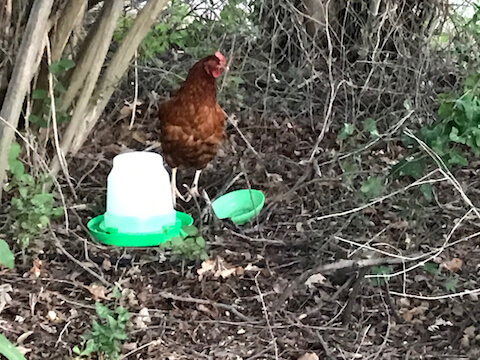

What do chickens eat?
This hen, from my neighbor’s yard, was clearly stressed when she moved into my yard. She had a bleeding cut and missing feathers on her back from a cat. Her comb was pale, a clear sign of stress, and she had lost most of her tail feathers. I never did determine the cause of the lost tail, but chicken flocks are hierarchical. She may have lost the feathers to “hen-pecking” from the other birds in the flock.
Chickens are omnivorous, and eat insects, worms, sometimes each other (yes, they will peck holes in one another under certain conditions), grains, calcium, dirt (yes, they do eat dirt), leftover vegetable scraps, even egg shells.
Feeding laying hens for a steady supply of healthy fresh eggs
Layers have great demand on their bodies. They need water, balanced nutrition, and calcium (in the form of ground up sea shells or other sources). The main feed is called “layer mash”: ground up grain with other nutrients designed to provide the 40 nutrients active laying hens need. You can purchase this at feed stores or home hobby-farm stores. In addition you should provide chickens with periodic high protein treats, such as freeze-dried meal worms. I also supplement on occasion with plain oatmeal (not the instant kind), ground corn, and cracked grains and nuts scattered on the ground–chickens instinctively scratch with their talons to find food on the ground.
If your yard does not have a good source of gritty soil, then you will want to purchase some grit or sand for the chickens. They actually do ingest the dirt. It settles in their gizzard, which is a muscular organ with a thick lining. Since chickens do not have teeth, they chew grains and seeds and nuts with the grit in their gizzards.
Image credit: Glenn Emerson for My Chinese Home Kitchen, 2023
When this old girl began to grow new tail feathers, and got strong enough to fly again, she also started laying eggs again. Her comb became a healthy red (a chicken’s comb is like a car’s radiator–it is filled with blood vessels that allow the chicken to regulate body heat). So, I switched her from chick grain to layer mash. I still supplement her diet with handfuls of scattered oatmeal, especially when I want her to help with weeding my yard.
Chickens and gardens
Backyard poultry can be much more useful than just giving you fresh eggs at home. Properly managed, chickens can be very beneficial to your garden. Chickens will eat the bugs that eat your plants, reducing your need for pesticides. Chickens generate manure high in nitrogen, reducing your need for commercial fertilizers. High nitrogen chicken manure, added with the high carbon leaves and grass clippings from your yard, and the vegetable scraps from your table produce quality compost. If you live an area with poor soils, like me, compost is essential for gardening.

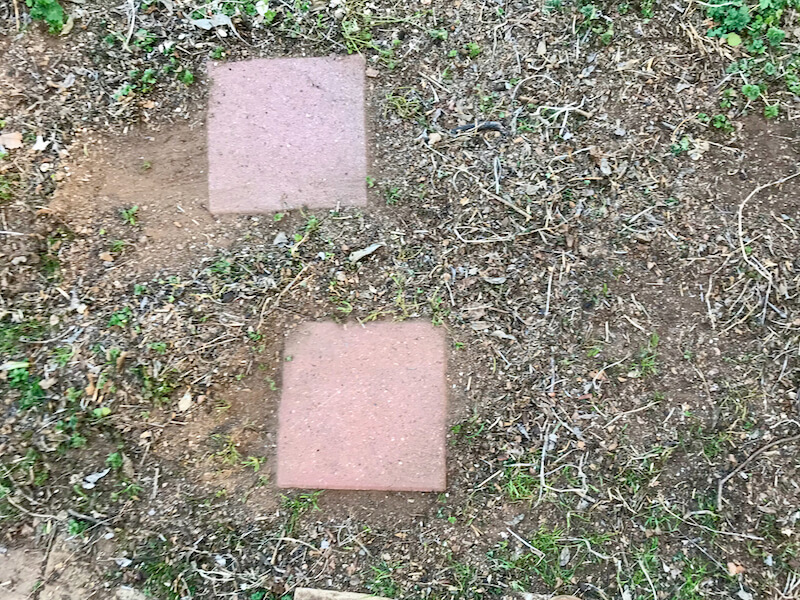
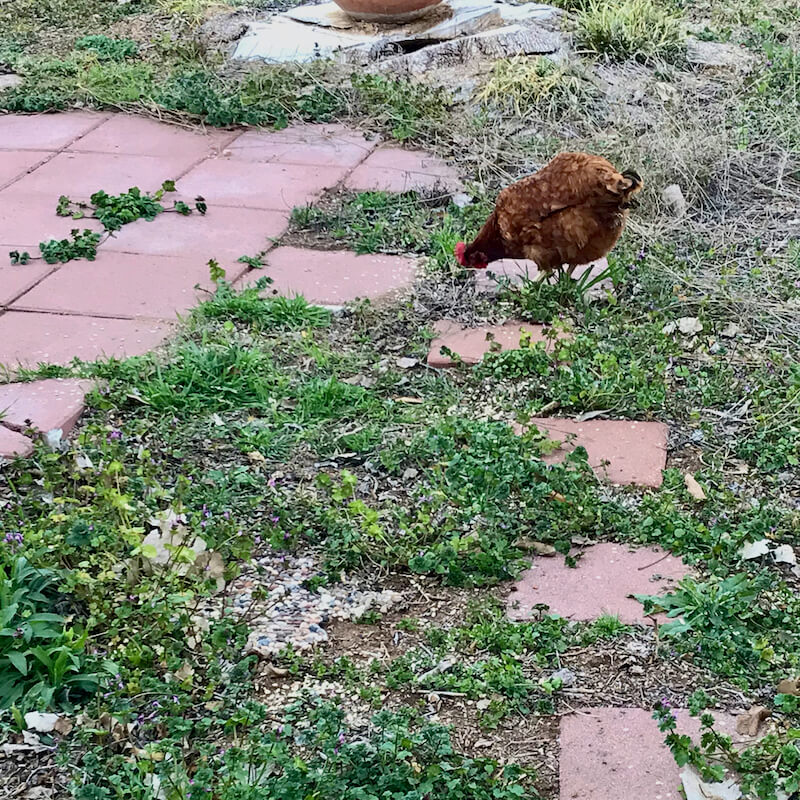
Chickens will also weed your garden. A chicken does not know a weed from a plant, but chickens will scratch up small plants when scratching for bugs. Chickens also like to take dirt baths to prevent lice and mites from infesting their feathers. So, do not allow chickens into new plantings. You will find your seedlings all scratched up and a happy hen or two rolling in the dust.
How hardy are chickens?
Left entirely alone, chickens can survive for a time. For about a year, there was a flock of stray roosters wandering the creek near my home. The temperature here ranges from 115 degrees (46 C) in the summer to 25 degrees (-4 C) during the winter. A chicken’s feathers provide a layer of insulation, trapping dead air about the body and those six roosters survived. However, chickens need shelter from predators if they are to live for very long. Chickens also have real nutrition needs if they are going to be strong and healthy. Over time, those six roosters became five, then three, and then I stopped seeing and hearing them altogether.
With care and shelter from predators, chickens can live for 10 years or longer. Some breeds will even keep laying eggs that long.
Backyard poultry and predators
While chickens have many predators, cats that try to attack a full grown chicken usually regret the experience. Chicken talons are tough and sharp, beaks are hard, pointy, and chickens use them mercilessly in self-defense. The threats to grown chickens include hawks, raccoons, weasels, foxes, and sometimes dogs that have decided they like killing chickens. Most dogs get along with chickens though. Eggs are liked by skunks, possums, snakes, rats, and mice.
The best way to protect your chickens is provide them with a shelter at night. This should include a roost, and if a nest box or two. A roost is as simple as a rod or board that the chickens can fly up to and sleep, so they can get off the floor. You can build a fancy chicken coop, or simply fence off an area of your garage and cut a hole in the wall for the chickens to go out in the yard.
If you place a dropping board under the roost, and keep the coop clean, and keep the chicken door closed at night, you should be able to avoid problems with rats, snakes, mites, lice, or other critters that want to get into the coop. Pick up eggs each day, wash and refrigerate them. If your yard is open, chickens should have overhead protection from raptors. However, I do not bother with this: there are enough hiding places under shrubbery and brush in my yard that the hen quickly gets to cover when a raptor is overhead.
How many chickens?
For fresh eggs at home, a single laying breed hen can suffice for one or two people. However, chickens are social animals and like to flock together. Chickens do not require much space, so the main limiting factor is the volume of manure the chickens produce. If you are not gardening (either with garden beds or container gardening), your need for compost will not be great. If you have poor soil for your lawn, you can use compost to help fertilize your lawn each spring. If you are not composting, then disposing of the chicken manure and used bedding or litter can be a challenge. Start with just a few birds, and make friends with a neighbor who does garden, or join a garden club that will accept your compost.
Eggs can be preserved, and we will have articles on how to preserve and store eggs coming soon. Since chickens generally do not lay eggs in the winter (unless you use artificial light), preserving eggs can be a good way to ensure you have eggs to last until spring.
Some of our recipes that use eggs
We do not have many egg recipes, but we do have several recipes that use egg whites to help coat and seal meat to keep it moist and tender when cooking. In a stir-fry, this is called velveting, or a velvet stir-fry. A mix of starch and egg white is used to coat the meat, keeping it from drying out when cooking. However, this does not produce a crust. Instead, the coating disappears after cooking and you end up with tender, moist meat. We also have a few recipes that use a batter, and include egg in the batter.
Egg dishes



Blanched in oil or water

Batter dipped and fried


Fried rice and noodles


Breaded and deep fried


Do you enjoy My Chinese Home Kitchen?
We enjoy sharing these authentic home recipes with you. My Chinese Home Kitchen is a labor of love.
Please tell your friends about us!
Learn more about My Chinese Home Kitchen at our About page.
Please leave a comment, or SUBSCRIBE to our newsletter.
For more of our original videos, visit My Chinese Home Kitchen on YouTube and Rumble.

