

Many Chinese dishes produce a broth when cooking, and some have a broth or sauce added. The natural juices from vegetables and fresh ingredients are usually thickened to glaze the ingredients evenly, using a Chinese cooking technique called DăQiàn (打芡). In some dishes, such as Sweet and Sour Pork, we make a sauce in the wok before adding the cooked ingredients just to coat them. In braised dishes like Red-Braised Pork, we make a broth in the wok to simmer the ingredients before thickening the sauce as the final step. Whether glazing the ingredients in their own juices, or making a sauce, the technique is similar: we use starch and water to thicken the boiling sauce.
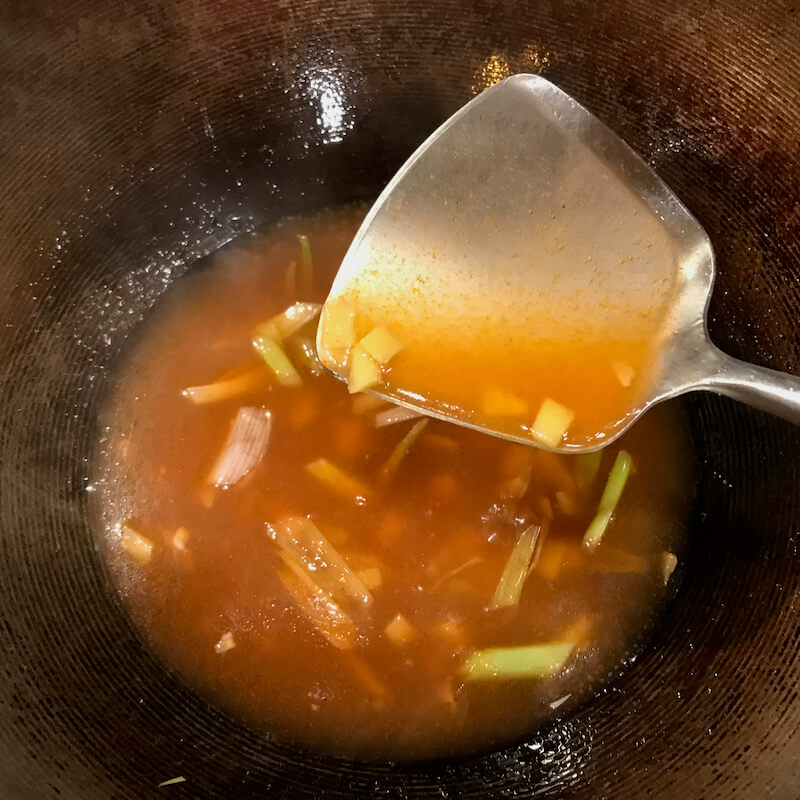
Have you ever made a Western gravy? Gravies are thickened with flour and water, which makes the gravy thick and opaque. Chinese cooking calls for lighter sauces, so we use cornstarch and water, instead of flour. I have found that a thick cornstarch solution works best for sauces, and a thinner cornstarch solution is more forgiving when glazing ingredients in their own juices.
How to mix the starch to thicken a sauce
For a sauce, I mix the starch and water at a 1:1 ratio, but for glazing, I use a 1:2 ratio of starch to water.
Adding water to the starch is best. Adding a dry ingredient, like flour or starch to water tends to result in lumps. Measure your starch into a small bowl. Then add room temperature water to the starch, and stir with a whisk or chopsticks.

Thickening a sauce
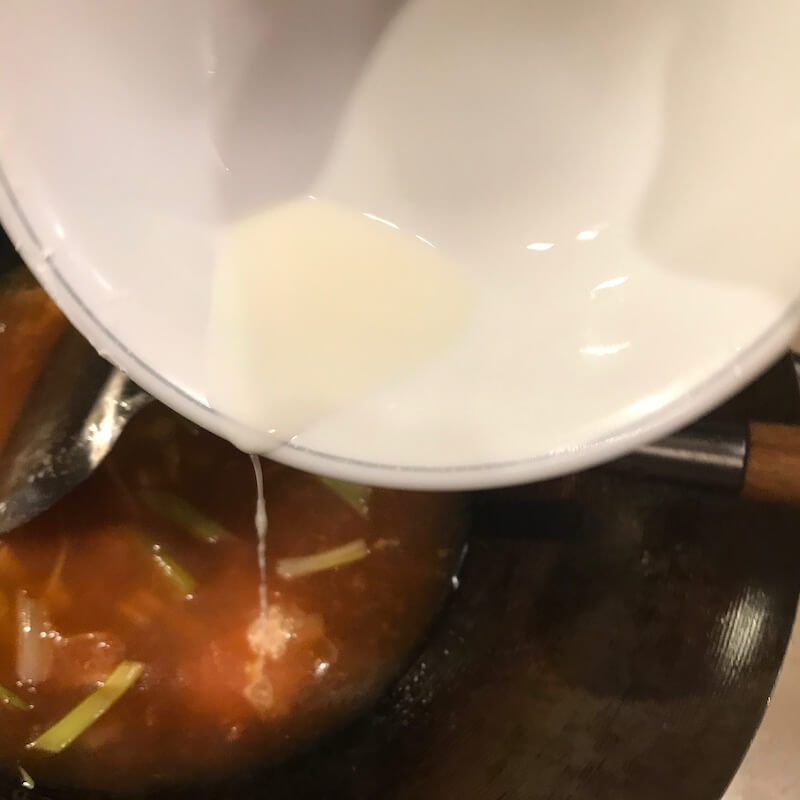
First, make sure the sauce is boiling. Do not add your starch slurry to liquid that is not boiling, or you will get globs. Quickly whisk the starch solution, as it will separate.
Add the starch a few drops at a time to the sauce, while stirring the sauce rapidly. Watch the consistency change. If it needs further thickening, add a few more drops of starch.
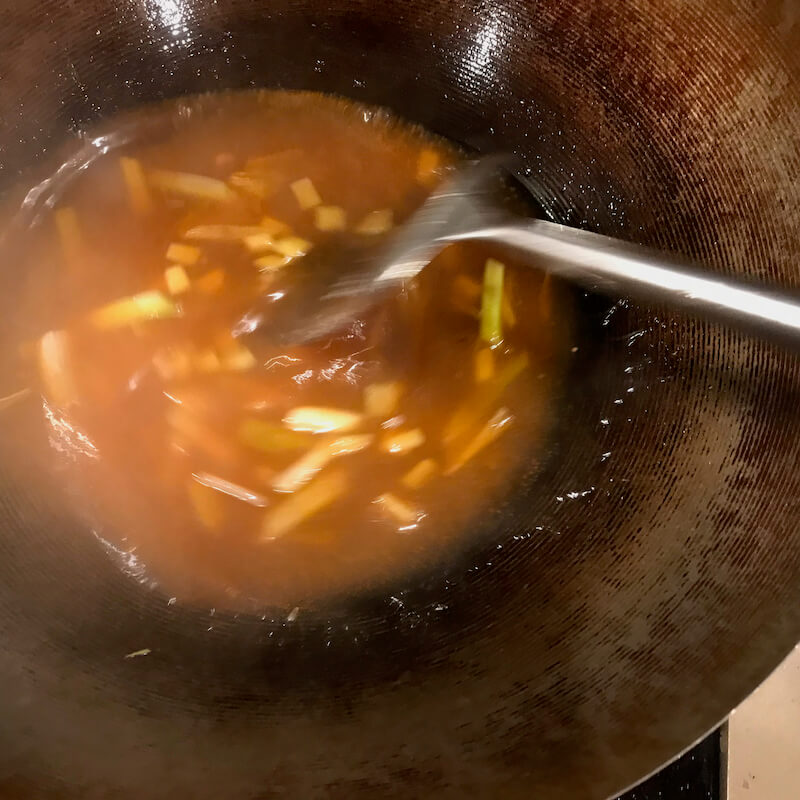
Keep repeating this cycle, add a few drops, stir vigorously, and watch the consistency of the sauce. When you are happy with the consistency, remove the sauce from the heat. Discard any remaining starch by rinsing the bowl under a running tap.
(Video) Chinese Cooking Techniques: How to Thicken a Sauce

Chinese Cooking Techniques: How to Thicken a Sauce
Equipment
- 1 mixing bowl
- 1 measuring spoon
- 1 pair of chopsticks (or a wire whisk)
Materials
- 1 part cornstarch
- 1 part water
Instructions
- Add a measure of corn starch to your mixing bowl.
- Add an equal measure of water and mix thoroughly
- Bring the broth to a boil.
- The starch will settle out of the water. Stir quickly to blend the starch and water. Then add a few drops at a time to the boiling sauce.

- Stir the sauce quickly to mix the starch into the broth.
- Check the consistency. Add a little more starch and stir, repeating until you have the desired consistency.
- Remove from heat, add any flavoring oils, and add the ingredients, tossing to combine, or pour the sauce over the ingredients.

Video
Related article
Do you enjoy My Chinese Home Kitchen?
We enjoy sharing these authentic home recipes with you. My Chinese Home Kitchen is a labor of love.
Please tell your friends about us!
Learn more about My Chinese Home Kitchen at our About page.
Please leave a comment, or SUBSCRIBE to our newsletter.
For more of our original videos, visit My Chinese Home Kitchen on YouTube and Rumble.

