

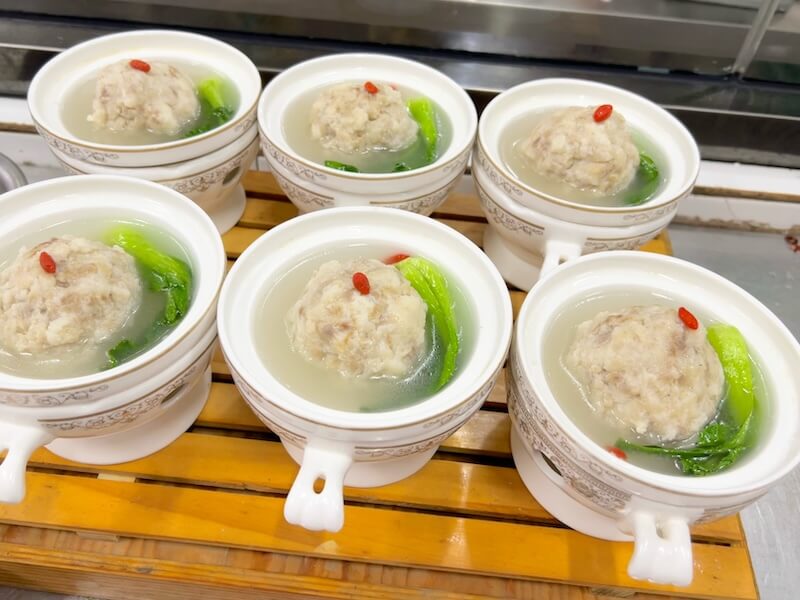
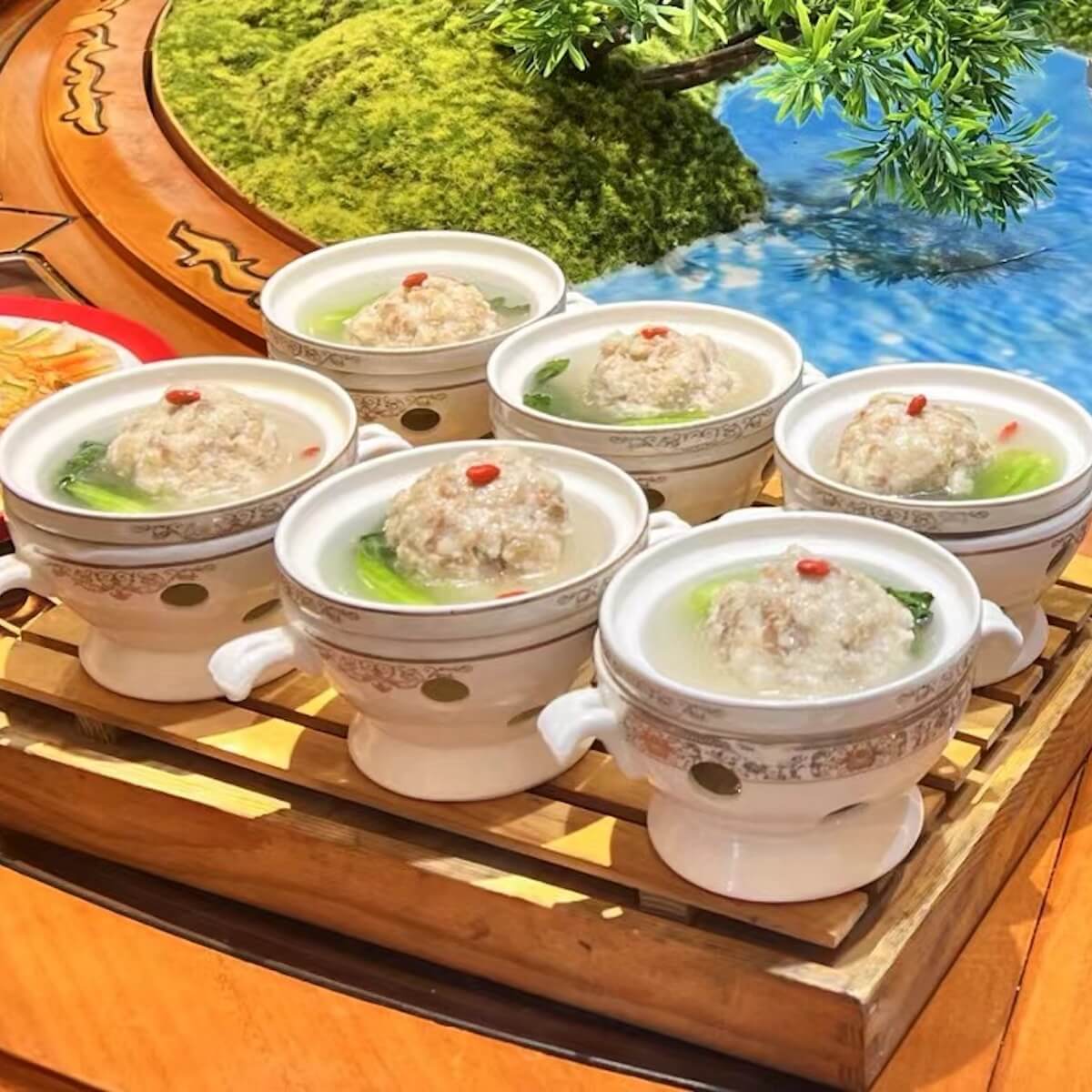
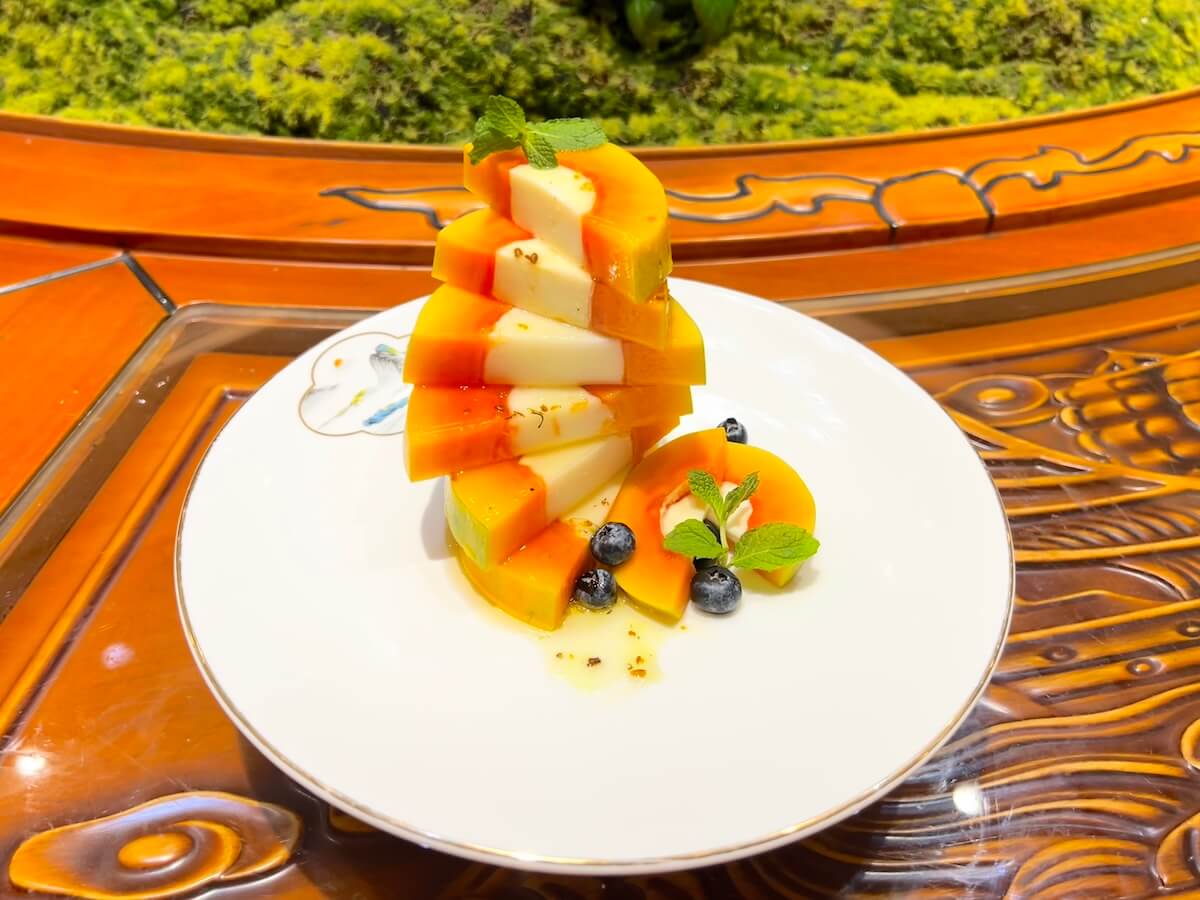
We have been slow with updates in the past few weeks, and we appreciate your patience. For the past month and a half, Jing has been attending school every weekend. She is approaching graduation later this month, and her class is learning how to prepare elegant Chinese banquet dishes. Some, like Stewed Lion’s Head, which we shared with you, are very traditional. The pumpkin soup is quite elaborate in the preparation. We also shared the recipe for custard-filled papaya slices.
Jing’s class projects for Chinese banquets
During the past month, working weekends at school, Jing has made the following dishes for class projects:
- Stewed Lion’s Head
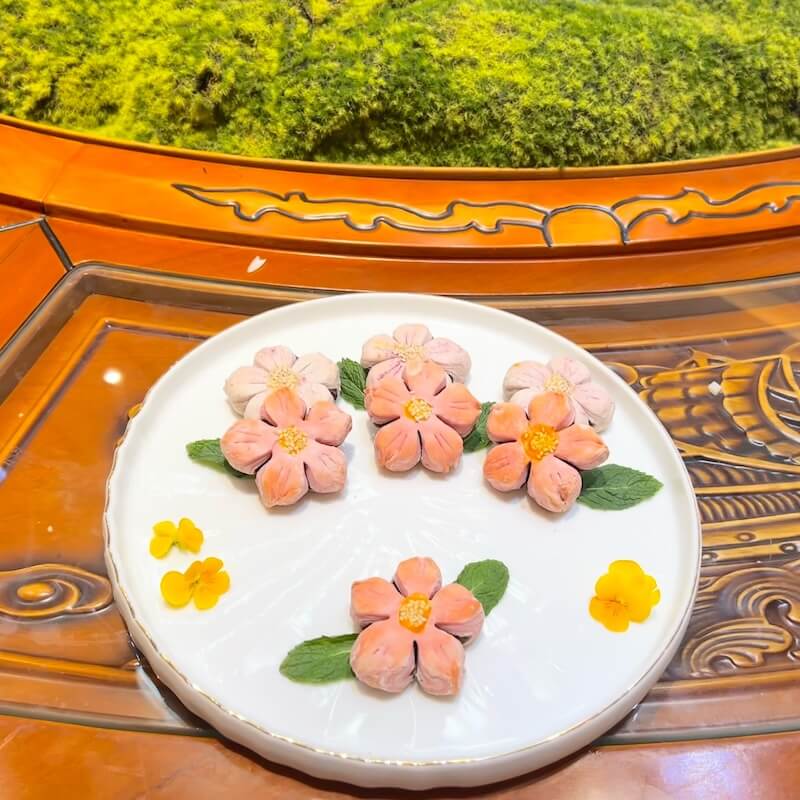
- Crispy Peach Blossom Cakes
- Custard-filled Papaya
- Pumpkin Soup
The pumpkin soup is the most complex of the Chinese banquet dishes. This recipe tests all of an aspiring Chinese chef’s skills, from delicate knife work to elaborate presentation, to contrasts of texture and color and flavor. The object in the soup is a bamboo shoot wrapped with wafer thin slices of pork belly. The pork slices are interwoven to make it appear like a raw bamboo shoot before it is peeled.


First, the pork is cooked, using a special dressing to lighten the color. Then the pork belly is flattened with a heavy object and frozen. Once frozen, Jing uses her cleaver to slice the wafer-thin pieces. The pumpkin soup is made by boiling pumpkin, pureeing the stewed pumpkin with a juicer, and then frying the puree in oil. Finally, water is added, the broth is brought to a boil, and thickened with a starch-water slurry.
Recipes for Chinese banquet dishes
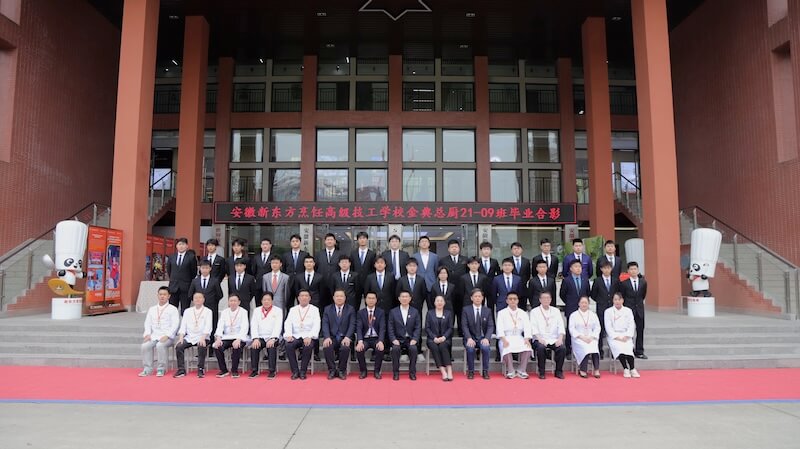
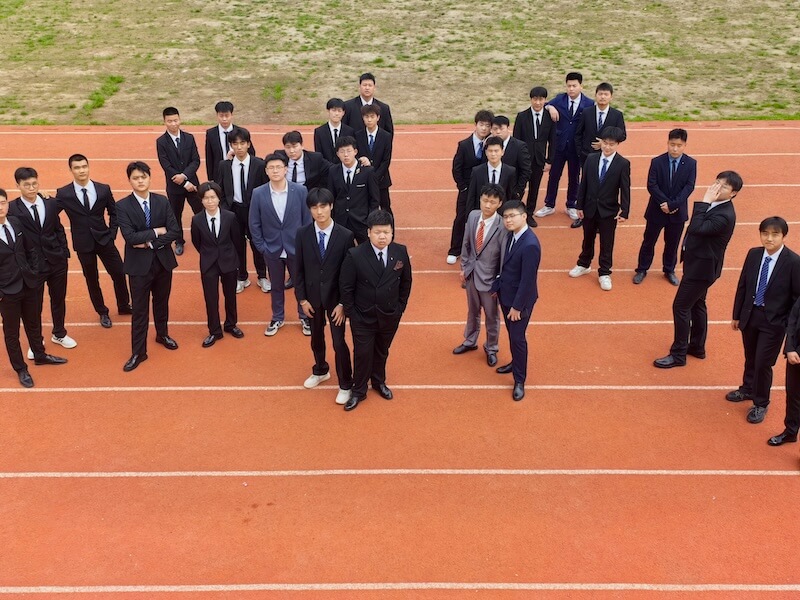
Jing’s culinary class graduation photos
After a month making traditional Chinese banquet dishes, Jing and her classmates posed for their graduation photo. While this is an important milestone for anyone, Jing is the only female in an all-male program, and only the 6th woman to take the Chinese cuisine major. I’m very proud of her. The physical demands of cooking Chinese cuisine are significant and difficult, even for men. Working in a kitchen that can reach 130 degrees (F) and tossing food in large cast-iron woks over burners that generate up to 200,000 BTUs requires a lot of strength and stamina. She has worked very hard, including lifting weights to strengthen her arms and wrists, and she is graduating near the top of her class.
Graduation, and next steps
Some of the students are signing up for summer internships. Recruiters have been to the school to tell students about their programs. Jing’s immediate plans are to return to working on My Chinese Home Kitchen full-time. We’ll be able to bring you lots of new recipes, teaching videos, and travel stories very soon. She is continuing to work on her university degree in culinary technology and nutrition, and expects to complete that within a year.
Jing has also expressed a desire to visit the United States and to improve her English skills. Since My Chinese Home Kitchen is a business, and we publish primarily in English for a North American audience, we sought to bring her here for temporary study in English as a Second Language. The J-1 visa program was created for this very purpose, to expose foreigners to the English language and American culture as a kind of ambassadorship, and to prepare to take the TOEFL (Test of English as a Foreign Language).
Unfortunately, we ran into bigotry and greed at schools like University of Texas at Austin. They literally stated they won’t sponsor an orphaned Chinese girl from a poor background to study English for a few weeks:
Email from English Language Center, Texas Global | The University of Texas at Austin
- The applicant is an orphan
- The applicant has no support network outside of her employment
- [Before her employment] the applicant endured New York-style winters in an apartment with no heat
Even though it is perfectly legal for American businesses to bring their foreign employees to the US for this purpose, UT made it clear they are only interested in the children from wealthy families. Jing is a talented, intelligent woman, and she has worked very hard to earn her success. The privileged staff at UT have forgotten that only a few generations ago, Texans also overcame the hardships and poverty of frontier life through hard work and self-reliance. Sadly, Jing’s real achievements in school and life make no difference to them.
Thank for your continued support and readership. We have lots of new material coming your way soon. Despite some minor setbacks from narrow minds, like those at the University of Texas, we are very positive about the future.
Do you enjoy My Chinese Home Kitchen?
We enjoy sharing these authentic home recipes with you. My Chinese Home Kitchen is a labor of love.
Please tell your friends about us!
Learn more about My Chinese Home Kitchen at our About page.
Please leave a comment, or SUBSCRIBE to our newsletter.
For more of our original videos, visit My Chinese Home Kitchen on YouTube and Rumble.

