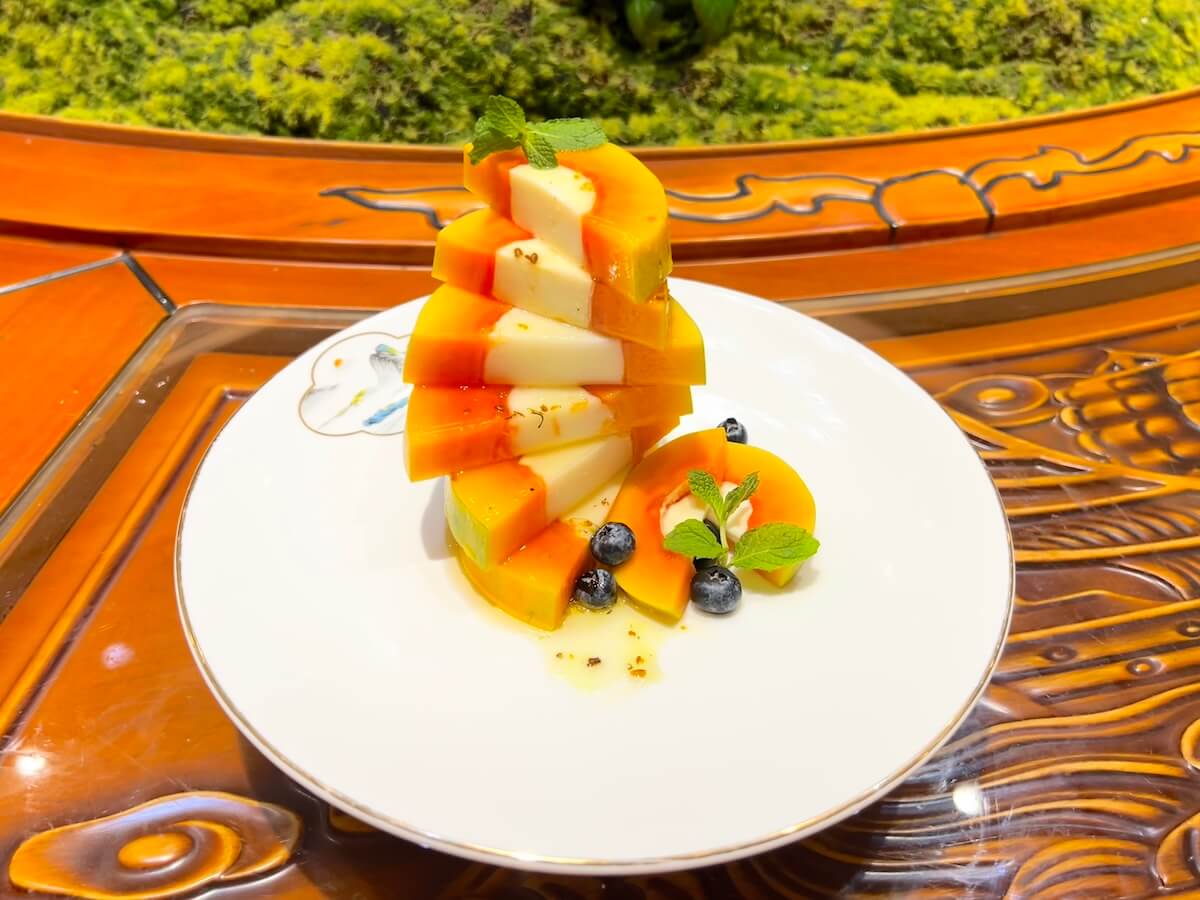
Jing's Custard-filled Papaya Slices

This is a simple, elegant desert, chock full of vitamins and anti-oxidants. It takes a few hours in the refrigerator to set, so, prepare it several hours or the night before your dinner. The filling is made from warm milk mixed with unflavored gelatin, poured into cavity left by the seeds. This is not a true custard, as it does not use eggs, but the consistency is about the same.The exact amount of milk and gelatin depends on the size of the papaya you are using, but if you are using Knox unflavored gelatin, the ratio is 1 packet (2 teaspoons or 7 grams) to 16 ounces (500 ml) whole milk. The milk helps the gelatin to form. Fruits like papaya have protease enzymes that will break down the collagen in the gelatin to keep it from becoming firm. When it is set, it will have the consistency of jelly or pudding.In Europe and Asia, leaf or sheet gelatin is available. The equivalency is about 5 sheets of leaf gelatin to one packet (7 grams) Knox powdered gelatin.
Equipment
- 1 1.5 quart saucepan
- 2 measuring cups
- 1 rubber spatula
- 1 plate
Ingredients
- 1 papaya (ripe)
For the custard
- 2 cups whole milk
- ¼ cup cold water
- 1 pouch Knox unflavored gelatin 7 grams or 2½ teaspoons
For the topping
- osmanthus syrup with honey drizzle lightly
- 4-6 blueberries
- 3-4 mint leaves (optional garnish)
Instructions
Prepare the papaya
- Choose a ripe papaya, with the skin yellow to orange, and the flesh soft to the touch.1 papaya
- From the bottom, or wide end, of the papaya, cut a thin slice crosswise to give the papaya a flat bottom. At the narrower end or top, cut crosswise to expose the seed cavity. Remove thin slices until just enough of the papaya top is cut away.
- Use a spoon to scoop out the seeds. (The seeds are not used in this recipe, but they are edible if you choose.) Stand the papaya upright on end. (You have just made an open-top upright bottle.)
Making the custard
- Measure ¼ cup (50 ml) of cold water in a measuring cup. Sprinkle the gelatin powder on the water. Let it stand one minute. This separates the granules and avoids creating lumps. Do not skip this step.¼ cup cold water, 1 pouch Knox unflavored gelatin
- Measure 2 cups (500 ml) of whole milk and pour into the saucepan. Heat the milk, but do not boil or scald.2 cups whole milk
- Add the water and gelatin to the milk when the milk is hot. Stir well with the rubber spatula until the gelatin is completely dissolved, at least 2 minutes. Stir gently, do not splash the liquid on the sides, or the granules will just stick to the side of the pan. Use the spatula to scrape the sides and bottom of the pan as you stir to keep the gelatin granules from settling.
- When the gelatin is completely dissolved, pour the hot milk into the hollowed out papaya. Wrap the whole papaya in plastic wrap. Then place the papaya, standing upright, into the refrigerator.
Serving
- When the milk has firmed to the consistency of jelly or pudding, remove the papaya from the refrigerator. Using a sharp knife or vegetable peeler, skin the papaya carefully. The skin is very thin, so be careful not to cut too deep if using a knife.
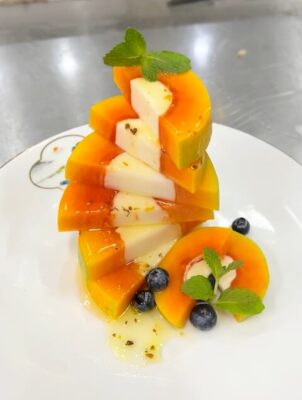
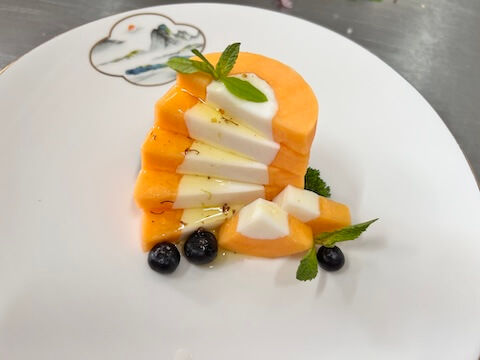
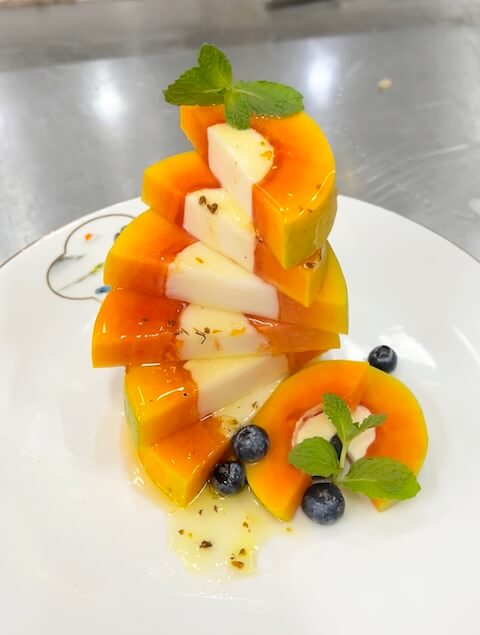
- Using a sharp knife, cut the papaya cross-wise into slices about ½-inch (13 mm) thick. Halve or quarter the slices as shown.

- Carefully stack the slices as shown, or arrange in whatever manner pleases you.
- Lightly drizzle the slices with the osmanthus syrup and honey. This is very sweet, so drizzle sparingly.osmanthus syrup with honey
- Garnish with fruit, mint leaves, etc. and place it back in the refrigerator until you are ready to serve.4-6 blueberries, 3-4 mint leaves
Notes
- Papaya has protease enzymes that will break down the collagen in gelatin. The heat from the milk helps to inactivate these enzymes.
- To avoid lumps in the gelatin, it's important to separate the granules before dissolving. Pouring the powder into the cold water, and letting it stand for a minute separates the granules. This is an important step. Adding the gelatin powder directly to hot liquid will cause lumps to form.
- You can buy osmanthus syrup, or make your own. If using homemade, make it ahead of time to let the flavor develop.
- A sharp knife is important. Ripe papaya is soft, and a dull knife will bruise or mash the papaya as you try to slice.
- You can let the milk custard filling set overnight if you want. It may take longer than four hours for it to reach the desired consistency.
- For more information about powdered gelatin and sheet gelatin equivalencies, see https://www.knoxgelatine.com/basics.htm
Nutrition
Calories: 110kcalCarbohydrates: 15gProtein: 5gFat: 4gSaturated Fat: 2gPolyunsaturated Fat: 0.2gMonounsaturated Fat: 1gCholesterol: 15mgSodium: 54mgPotassium: 327mgFiber: 1gSugar: 12gVitamin A: 952IUVitamin C: 47mgCalcium: 168mgIron: 0.3mg
Tried this recipe?Let us know how it was!