
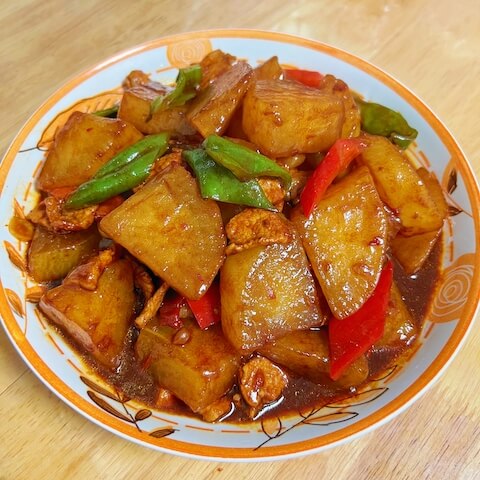
Red Braised Daikon Radish

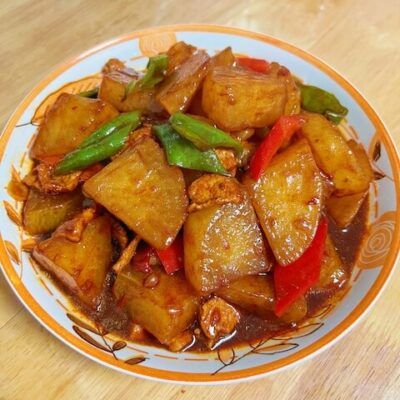
In my Chinese home kitchen, we have several red-braised recipes such as braised chicken, braised pork ribs. These are all meat dishes, however, in home cooking, it is not only meat but also vegetables that can be red-braised. Today we are going to make red braised daikon radish. We will use white radish, which has a firm texture, allowing it to be red-braised with good results. This recipe also includes pork, so it’s not a vegetarian dish. Part of the preparation for red braised daikon radish is to blanch the radish before braising. This can be done with water in a saucepan, for about 20 minutes, or a pressure cooker for about 5 minutes after the cooker begins to steam. We use salt to taste. Soy sauces and doubanjiang have a salty flavor, so when seasoning, add the light soy sauce and test the flavor before adding any salt. On our website there is also a Guangxi home recipe for pickled white radish: two recipes, completely different production methods and finished products. If you are interested, you can try both.
Equipment
- 1 wok
- 1 wok spatula
- 1 bowl
- 1 sauce pan (or pressure cooker)
Ingredients
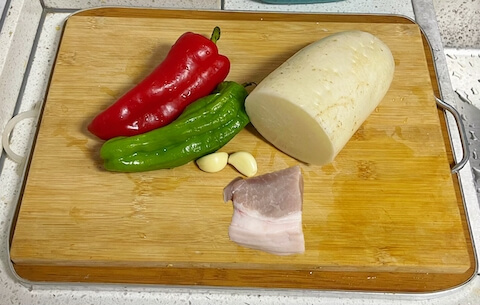
- 500 g daikon (Chinese white radish) Daikon
- 1 green chili pepper
- 1 red pepper
- 80 g pork
- 2 cloves garlic
- 10 ml Pixian Doubanjiang bean paste
- 5 ml dark soy sauce
- 7 ml light soy sauce
- 3 ml sugar, white (granulated)
- 2 ml salt (to taste)
- 15 ml starch water 1:1 corn starch to water
- 15 ml cooking oil (stir-fry)
- 10 ml cooking oil to brighten
Instructions
Preparation:
- Wash the ingredients.

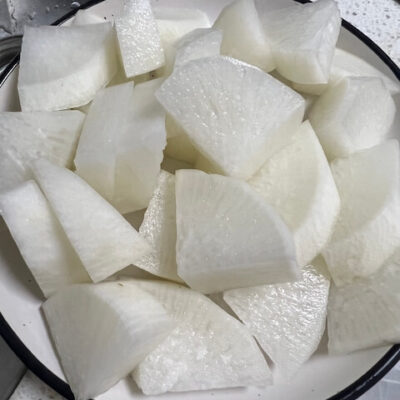
- Peel and cut the daikon radish into bite-sized chunks.
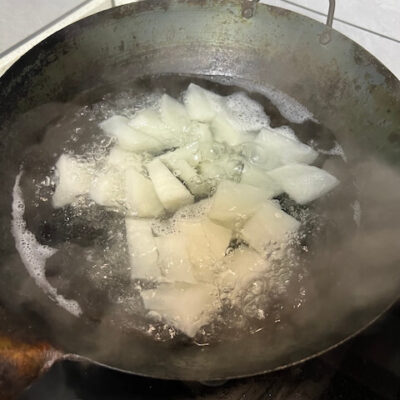
- Blanch the radish: in a saucepan, bring to a boil over high heat, then cook over medium heat for 20 minutes; in a pressure cooker, cook for 5 minutes after steaming begins. Remove the radish and set aside.
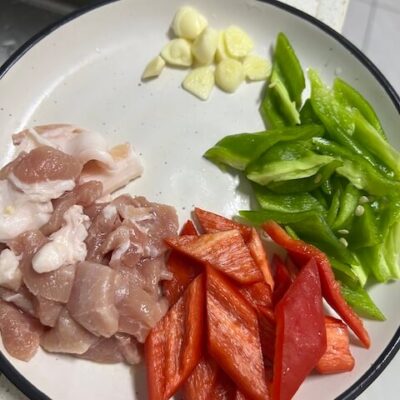
- Slice the pork, chili and garlic cloves.
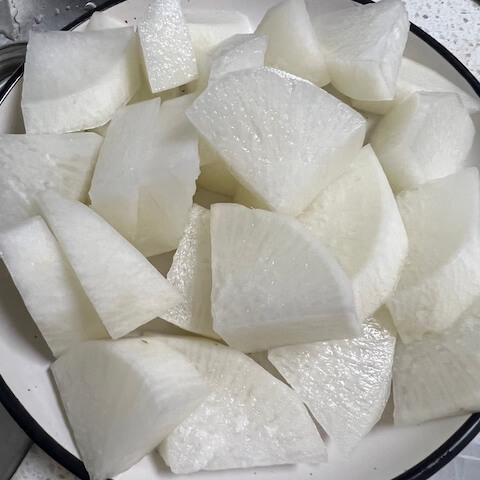
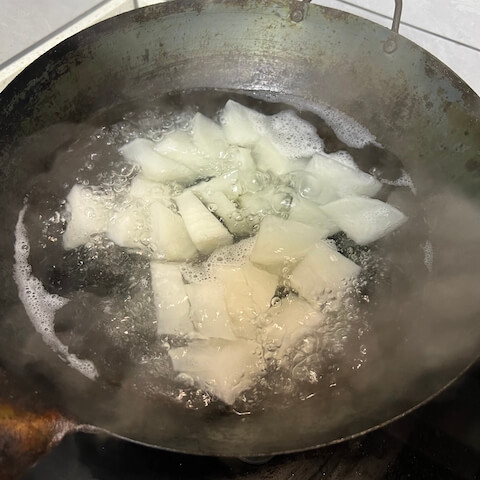
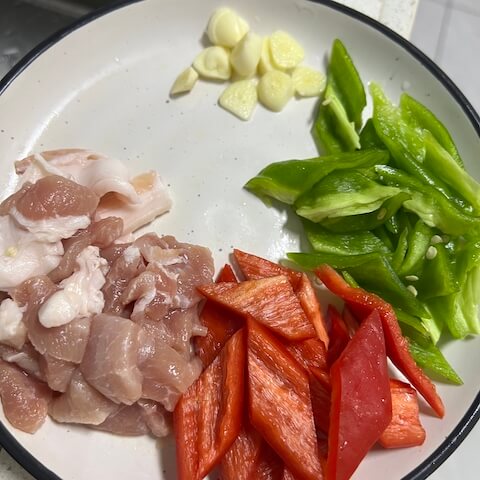
Cooking:
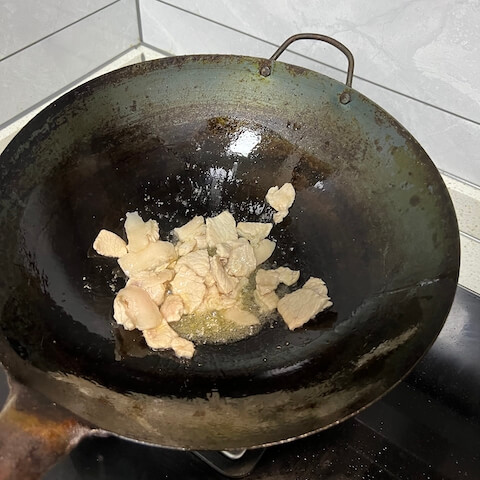
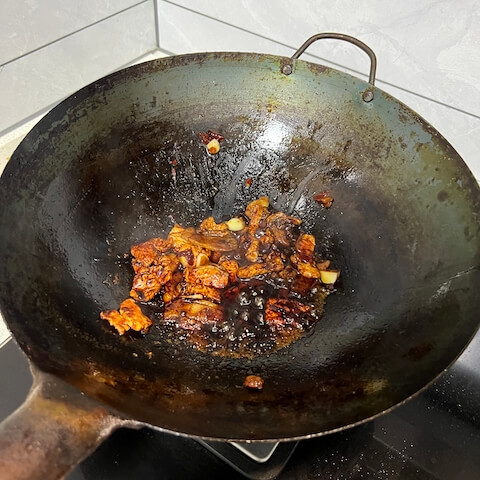
- Add 15ml of oil to the pan, add the pork, stir-fry until it changes color, then add the bean paste and garlic.80 g pork, 10 ml Pixian Doubanjiang bean paste, 15 ml cooking oil, 2 cloves garlic

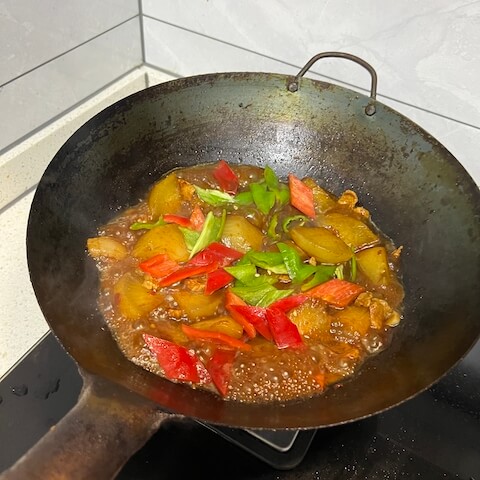
- Add dark soy sauce. Add the radish and peppers, then add enough water to bring it level with the radish. Season with sugar and light soy sauce, then add salt to taste. Cook over medium heat for 3 minutes and then add the chili pepper. Stir fry evenly.500 g daikon (Chinese white radish), 1 green chili pepper, 5 ml dark soy sauce, 7 ml light soy sauce, 2 ml salt, 3 ml sugar, white (granulated), 1 red pepper

- Add starch water slowly to thicken while stir frying to combine. You want the sauce to evenly coat the ingredients, but not so thick it forms clumps. Add 10ml of oil to brighten, stir-fry evenly and the dish is complete.15 ml starch water, 10 ml cooking oil to brighten
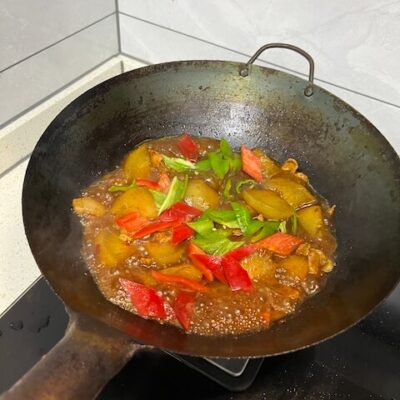
- Pour the finished dish into a serving bowl and serve.
Notes
- Radishes are soft when cooked. But the shape won't change much.
- Braised dishes require some of the broth to be reserved and the broth to be slightly thicker. The sugar and dark soy sauce in the broth cause the ingredients to take on a reddish color, thus the term “red-braising.”
- We use salt to taste. Soy sauces and doubanjiang have a salty flavor, so when seasoning, add the light soy sauce and test the flavor before adding any salt.
Nutrition
Calories: 158kcalCarbohydrates: 12gProtein: 5gFat: 10gSaturated Fat: 2gPolyunsaturated Fat: 2gMonounsaturated Fat: 6gTrans Fat: 0.03gCholesterol: 14mgSodium: 498mgPotassium: 387mgFiber: 3gSugar: 6gVitamin A: 109IUVitamin C: 46mgCalcium: 41mgIron: 1mg
Tried this recipe?Let us know how it was!