

Braising uses wet and dry heat to cook food. This is a common, traditional technique used in Chinese cooking. Red-braising (Hóngshāo) is unique to Chinese cuisine, and is most famous for Hóngshāo Rou (Red-braised pork belly).
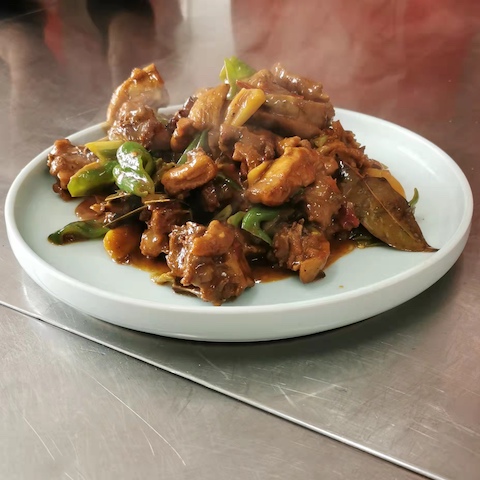


Braising is used with meats, vegetables, and mushrooms. In a typical braise, or brown-braise, the food is first browned to seal in flavor, then simmered in a broth or liquid. Braising tenderizes tough cuts of meat, like ribs and pork belly. A well-braised piece of meat can be cut easily, even with the edge of a fork. Usually, the liquid contains an acidic component, such as wine, balsamic vinegar, beer, or tomatoes.
During the slow simmering phase in the wet portion of the cooking the collagens in the meat break down and make it soft and tender. The braising liquid can also be used as a sauce or gravy.
Stewing and pressure cooking alternatives
Stewing is like braising but uses more liquid. For instance, in a beef stew, the browned beef is covered with water, whereas when braising the liquid only covers about 2/3 of the food.
Pressure cooking and slow cooking (such as in a crockpot or Instant Pot) are forms of braising. Famous braised dishes include Yankee Pot Roast, Coq au Vin (Rooster in Wine), Swiss Steak, Beef Bourguignon, and Hong Shao Rou (Red-braised pork belly). Braising is a very important part of Lu Cuisine.
Brown braising
Braising begins by searing the meat or vegetables to brown the surface. This causes a chemical change in the sugars and amino acids in the surface of the food. This change occurs at temperatures between 140 to 165 °C (280 to 330 °F). The scientific name for this is the Maillard Reaction. https://en.wikipedia.org/wiki/Maillard_reaction
When braising meat, the surface of the pan is covered with fat or oil, and the meat is browned on all sides, then removed.
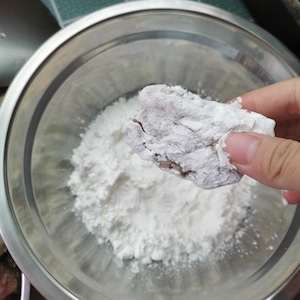
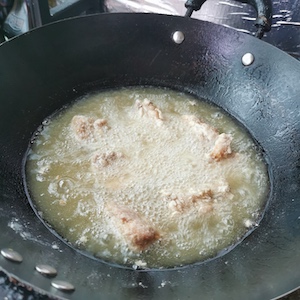
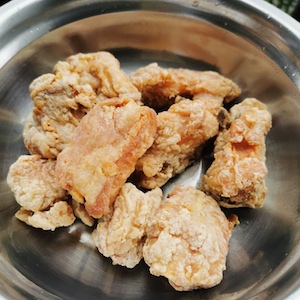
Remove the meat then add the aromatic vegetables and spices (onion, scallions, chilies, garlic, ginger, etc.) to flavor the fat. Add the stock or wine or water or soy sauce to deglaze the pan. Scrape any browned bits from the bottom and stir them into the broth. Bring it to a boil, add the meat back to the pot, and simmer.
Browning vegetables
When browning vegetables, start with the aromatics then add a small amount of oil. Shorten the cooking time: the goal is to brown them, not cook them down into a mush.
Red braising (Hóngshāo)
Red-braising is a Chinese cooking method. There are two methods: Hóngshāo and Lu. The Hóngshāo method used here can be done fairly quickly, in less than 20 minutes. Lu cuisine uses a longer time, usually several hours.
Red-braising relies on dark soy sauce and red bean paste (doubanjiang), and sometimes rock sugar, to give a red coloring to the meat. The beer or wine or other acidic liquid tenderize the meat being cooked.
Quality dark soy sauce is essential to red braising
You will want a quality dark soy sauce, such as Zhongba, Pearl River Bridge, or Lee Kum Kee, to prepare this dish. A true dark soy sauce is fermented longer than light soy sauce, and has sugar or molasses added.
Dry braising
This technique is useful with shrimp, scallops, prime rib, and other tender meat. Seafood cooks quickly and does not need the long simmering time with traditional braising.
Blanching the meat instead of browning
Jing’s Chinese Coca-Cola Chicken Wings recipe blanches the chicken before braising in cola. The cola acids tenderize the chicken while the broth cooks down to a delicious, sweet coating. Alternatively, you can brown the chicken before braising in the cola for a crispier skin.


Western method
In western dry braising, such as with chicken or tender beef, the dry braising technique is similar to brown-braising, but without liquid and involves three phases: browning then simmering with vegetables on a low heat for 30 minutes, then moving to a warm oven around 71 °C (160 °F) for an hour, then finally 2 hours in the oven at 93 °C (200 °F). Since this is method is not used with our Chinese recipes, we do not cover the technique in detail. For more information, you can read about western style dry braising at https://www.finedininglovers.com/article/science-dry-braising-how-braise-meat-no-liquid.
Chinese method
Chinese cuisine uses a different approach to dry braising. There is a popular Sichuan shrimp recipe from Chengdu that uses a kind of dry braising with the shrimp. Jing uses this approach with her Dry Pot braised shrimp and Coca Cola Chicken Wings. Chinese dry braising is also used with thin sliced beef, such as tenderloin.
Example: dry-blanching beef tenderloin
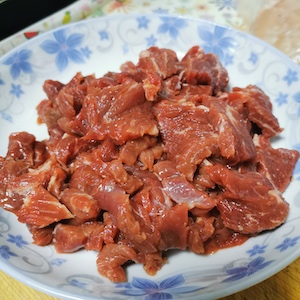
In the Chinese dry braising method, the meat is first blanched. With the beef tenderloin, it is dry blanched in oil before braising. (Dry blanching does not use water, as water leaches the nutrients and flavor from the meat.)


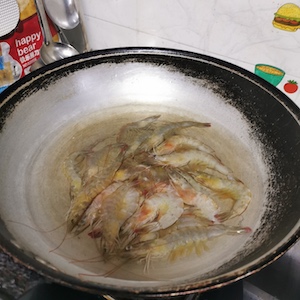
Example: blanching shrimp before dry braising
Put the shrimp into water and bring the water to a boil, until the shrimp changes color. Dry-blanch the beef in low temperature oil (around the boiling point of water) until it just changes color.
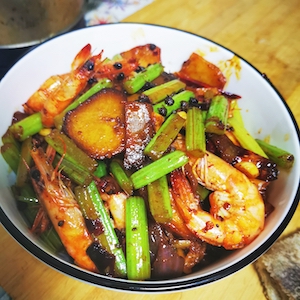

Set aside the shrimp or beef while you prepare the rest of the dish. When the broth is ready, add the protein back in to finish cooking and absorb the flavors of the broth. This only takes a few moments, and it is important not to overcook the meat.
Keys to success in dry-braising
Chinese style dry braising is much faster than western style dry braising. The keys to success are:
- thin slices of tender meat (such as beef tenderloin) or shellfish
- seasoning and blanching before dry braising
- preparing the broth and then adding the blanched protein to absorb the flavors
Chinese dry braising yields very tender meat in a flavorful broth, but without the long cooking time of western dry braising. As Jing’s teacher Zhu says, if customers have to wait a long time for their food, they will not come back to the restaurant.
Do you enjoy My Chinese Home Kitchen?
We enjoy sharing these authentic home recipes with you. To learn more about My Chinese Home Kitchen, please visit our About page.
Please leave a comment, or SUBSCRIBE to our newsletter.
For more of our original videos, visit My Chinese Home Kitchen on YouTube and Rumble.

