

Before you ask, my pet chicken did not get used in this recipe. She’s alive and well, laying eggs, and happily free-range grazing for insects. Soup stock or broth are foundational ingredients in many recipes and cuisines, from Cajun Étouffée and Texas Chain Gang Chili to Fujian Salty Rice and our rolled pork omelettes. However, while all soup stocks are simple to make and follow the same basic steps, the flavor varies by cuisine. More to the point, a Western chicken stock does not have the same flavor as a Chinese chicken stock. So, what makes authentic Chinese chicken stock different from Western chicken stock?
First, let me clarify some essential terms and concepts.
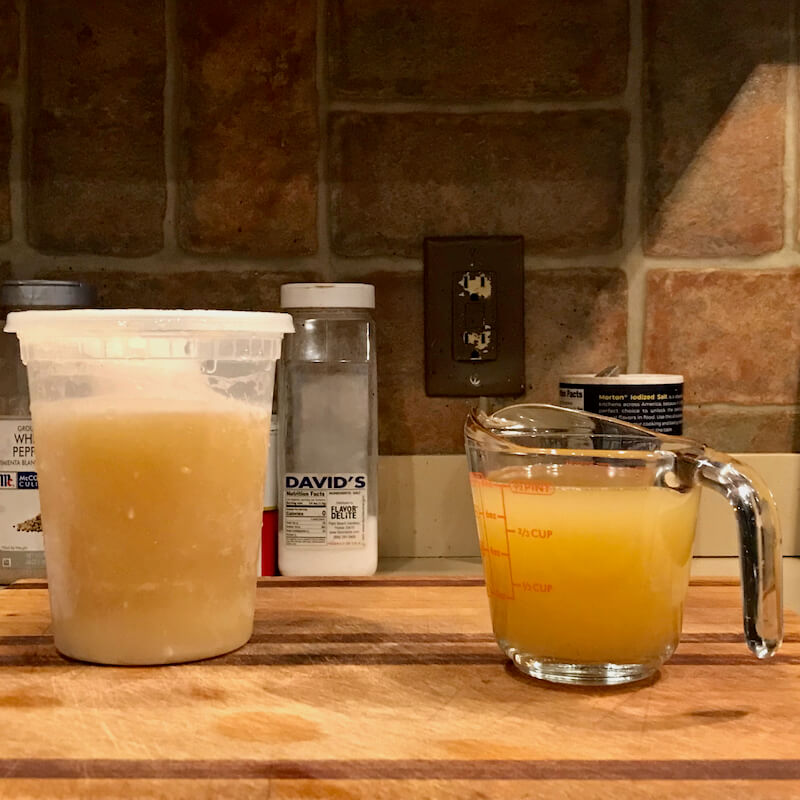
Image credit: Glenn Emerson for My Chinese Home Kitchen, 2024.
The difference between stock, broth, and “bone broth”
In classic cooking terminology, a broth (in French, bouillon) is made by simmering meat, vegetables, and spices in water for anywhere from 30 minutes to a few hours. A stock is made by simmering bones, marrow, and connective tissues (and sometimes meat too) with various aromatic vegetables for several hours.
Stocks are richer in flavor and more gelatinous in consistency, depending on how long they are simmered. When stored in the refrigerator, stocks look more like Jell-o (which is also made from bones), because of the high gelatin content, whereas broths will remain liquid. A “bone broth” is just a stock.
A broth, or a clarified stock, can be served as a bouillon or consommé, and is used in dishes where the flavors of other ingredients are more important, such as chili or Fujian Salted Rice (Hokkien Salted Rice). In French cuisine, stocks are often used to make the “mother sauces.” A mother sauce is the starting point for making other sauces, like demi-glace, bearnaise, provençale, cream sauce, and so on.
The basic Chinese chicken stock I am sharing here is closer to a broth than a stock in the classic definition because it is only simmered for a few hours. However, it uses bones and cartilage from the chicken, not just the meat. If it were simmered longer, it would become a true stock.
Paleo diets and bone broth
Since about 2015, with the emergence of paleo diets, there’s been a faddish obsession with “bone broth” and health. Some of this is marketing hype, like bottled water. Put water in a plastic bottle, slap a fancy label on it, write some marketing copy about pure mountain water, and sell what you could have gotten for free (sans BPA too) from the faucet.


A “bone broth” is just a stock that has been simmered longer. What the classic 1950 Betty Crocker Picture Cookbook called a “brown stock” (based on classical cuisine), which you can make at home in large batches for a few dollars, is the same thing being sold at premium prices as “bone broth” today.
Some bone broth recipes call for using vinegar (acid) to break down the nutrients in the bones and connective tissues. I can’t imagine this yields anything you would want to use as a basis for cooking other dishes. Traditionally, brown stocks use tomato or wine as their acid source, and achieve the same result with a good tasting outcome.
What makes homemade soup so healthy?
Soup stock is made by cooking down the bones, connective tissue, and marrow. You discard the solids when you are done. Those old soup bones are a great source of many essential nutrients, fat, amino acids, and collagen. The medically-documented benefits include weight control, diabetes control, reducing inflammation and osteoarthritis, improving gut health, and good nutrition including essential fats and vitamin B12.
For more details on the health benefits, please see WebMD.
The differences between Chinese and Western soup stock
Chinese and Western stocks both use meat, bone, marrow, and connective tissues. All broths and stocks are made with aromatic vegetables to add flavor. In classical Western culinary terminology, these vegetables are collectively called mirepoix. Western stocks use onion, carrot, and celery for the mirepoix, primarily. Some also add bay leaves, thyme, parsley, peppercorn, or other flavorings in a spice cachet.
Chinese cuisine has many soup stocks, and clear-simmered dishes that form their own broth, such as Jing’s Fresh Mushroom Soup and Tofu Soup with Vegetables and Egg, Family Style. There are two basic Chinese stocks used in many dishes: chicken; and pork (meat). Instead of the aromatic vegetables (onion, parsley, carrot) used in a Western chicken stock, Chinese stocks use green onion, ginger, and a small amount of salt. A meat stock also uses rice wine. (Note, for bone broth fans, the wine is an acid and helps break down the proteins, collagens, and amino acids in the meat, bone and connective tissues, similar to a brown stock in Western cuisine.)
You may have noticed, this is common in many simmered meat dishes too. For example, Home-style Hóngshāo ròu (Red-braised Pork), Guangxi-style Steamed Pork (Kou Rou 扣肉), Sichuan Mouth-watering Chicken (口水鸡 Kǒushuǐ Jī), and Sichuan Pork in Spicy Broth–Shuizhu Pork are all simmered with these aromatic ingredients.
The flavor difference is noticeable. If you try to substitute Western chicken stock for Chinese stock when making wonton soup, as I once did, you will be disappointed in the result.
Making your own stock is easy, healthy, and economical
Making your own stock or broth at home is pretty easy, and has major advantages.
- First, it’s not that hard to do: basically it involves simmering meat, bones, and a few other ingredients in water for several hours, then straining out the solids.
- Second, you can be sure the stock you make is all natural.
- Third, making your own soup stock is a great way to stretch your food dollar: before you throw away the bones from that roasted chicken or duck or turkey, get one more use from them by making a stock.
Laundry day is a great day for making a stock. Set a pot of stock on to simmer for several hours while you do your other tasks. Just give it a stir from time to time, and after 3 or 4 hours, strain the stock and let it cool, then store it.
Homemade stock or broth can be refrigerated for several days, or, for long term storage, frozen in individual use containers. (I use one-quart takeout soup containers.)
Chicken thighs, breasts, and breast cutlets all sell for higher prices per pound than whole chicken. Save money by purchasing a whole chicken and butchering it yourself. Cutting up a whole chicken is easy, taking just a few minutes.
How to butcher a whole chicken
Here are a couple of videos showing how simple it is to cut up your own chicken at home. The first shows the Asian method, which chops the chicken into several pieces. The other shows the Western method, which yields the familiar portions you typically find in the grocery store.
In addition to saving money on your food budget, if you are trying to add stocks to your diet for the health benefits, purchasing and butchering whole chickens will give you lots of raw material for making stocks at home.
What cooking utensils do I need to make basic chicken stock?
A good stock pot with a well-fitting lid is essential. Stainless steel is the best choice here, because it won’t react with acidic liquids. Cast iron and aluminum will react with acids (wine, tomatoes, etc.) and affect your stock.
Stock pots are narrow and tall. This allows you to cover the bones with water, while exposing less surface area, thus reducing evaporation during the long simmer.

You will also need a sharp kitchen knife to cut the chicken, a colander, cheesecloth, and large pot for straining the finished stock, and, if you plan to store the stock, freezer safe containers.

Chinese Chicken Stock

Equipment
- 1 stainless steel stockpot
- 1 colander
- 1 slotted spoon
- cheesecloth
- 1 4-quart or larger saucepan (for straining the stock, after simmering)
- 4 1-quart freezer-safe containers optional, for storing the stock in the refrigerator or freezer
Ingredients
- 1 whole roaster chicken about 4 lbs. (1.8 kg)
- 1 whole green onion
- 4 slices fresh ginger about the size and thickness of a US quarter
- 3 quarts cold water
- 2 tsps salt (to taste)
Instructions
Cut up the chicken
- Be sure your knife is scalpel sharp. A dull knife is very dangerous because you are more apt to slip or have to use excess force.
- Rinse the chicken inside and out, be sure to remove any blood clots. Be sure to get all the blood out, as this will cloud the stock. If you bought the chicken pre-packaged from a grocer, be sure to remove the packet of giblets, heart, and live, and the neck from inside the carcass. These can go in the stockpot.1 whole roaster chicken
- Use paper towels to dry the chicken carcass inside and out.
- If you are not experienced with cutting up a whole chicken, refer to the video for a demonstration.
- Remove the legs by cutting the skin between the thigh and the belly. Then bend the legs backwards until the hip joint pops. Cut the thigh away from the body.
- Separate the thigh from the drumstick on each leg, by cutting along the fat seam at the joint. Chop the thigh into three pieces cross-wise. Chop the drumstick into two pieces cross-wise.
- Remove the wings.
- Cut off the wing tips and toss them into the stockpot. Cut the wing from the drumette at the joint. Chop each portion into two, and toss in the stockpot.
- Remove the breast from the back as shown in the video. Find the diagonal fat seam that runs along each side, and cut through this to separate the breast and back. Repeat this cut on both sides. Toss the pieces into the stockpot.
- Split the breast into halves by chopping through the breastbone as shown in the video. Chop each breast into three equal pieces. Toss these into the stockpot.
- If you have not already done so, cut away the fat and extra skin at the tail, and toss into the stockpot.
Prepare the aromatic ingredients
- Peel and slice the ginger, and toss the pieces into the stockpot.4 slices fresh ginger
- Wash the scallion or green onion, trim any dead leaves and remove the roots from the bulb end. Toss the scallion into the stockpot.1 whole green onion
Cook the broth
- Cover the ingredients with 3 quarts of cold water. (Use softened, filtered water for best results.)3 quarts cold water
- Cover the pot, turn the heat on high, and bring to a vigorous boil.
- Reduce the heat to low. Wrap your slotted spoon with cheesecloth and gently skim the foam off the surface. When the liquid is clear, turn the heat to high and bring to a boil again, then lower the heat to maintain a simmer. Cover the pot.
- Stir occasionally to give the chicken room to expand. Let the pot simmer for 4 hours.
Cool and strain the broth
- Turn off the heat and let the broth cool a little.
- Place the colander over the large pot or saucepan, and line it with several layers of cheesecloth.
- You may need help with this step. Remove the large bones and pieces and discard. Pour the stock slowly through the colander lined with cheesecloth to strain out the solids.
- Discard the solids.
- If the stock still has impurities, rinse the cheesecloth and repeat the straining process.
- Season the stock lightly with salt to taste. Use salt sparingly, as you will use this stock in other dishes with their own seasoning.2 tsps salt
- If you plan to use the broth right away, measure out the amount you need for your recipe.
- To store the stock, pour into jars or storage containers and seal. A layer of fat will form on the stock in the refrigerator or freezer. This is good as it helps to protect the broth from spoiling. Remove this fat layer before reheating the stock for use in a recipe.
Video
Notes
- Cold water is best for soup stock, as it dissolves the albumin and other proteins, making for a clearer stock.
- To skim the stock, wrap a cheesecloth around a slotted spoon several times and gently skim the surface. Do not stir the whole pot, just skim the surface. You can wash the cheesecloth with hot soapy water and rinse to use it again.
- If you want to save some of the meat for use in other recipes, leave the pieces you want to save whole, and remove them after 30-40 minutes. For instance, if you want to save the breasts, do not chop them into small pieces.
- Buying a whole chicken and butchering it yourself is fairly simple, and saves a lot of money.
- If you have to step away during the simmering, turn off the heat. When you return, bring the pot back to a gentle simmer and resume the cooking process.
Nutrition
Recipes that use basic Chinese chicken stock
Do you enjoy My Chinese Home Kitchen?
We enjoy sharing these authentic home recipes with you. My Chinese Home Kitchen is a labor of love.
Please tell your friends about us!
Learn more about My Chinese Home Kitchen at our About page.
Please leave a comment, or SUBSCRIBE to our newsletter.
For more of our original videos, visit My Chinese Home Kitchen on YouTube and Rumble.

