

Beef Chow Fun (Beef Ho Fun) is a popular, delicious Cantonese dish that combines stir-fried beef slices with wide rice noodles, green onions, bean sprouts, garlic and ginger. The savory umami flavor comes from rice wine, soy sauce and oyster sauce. Variations also use sesame oil, fermented soybeans, or white onions. The dish is very simple, but the cooking is technique-sensitive. The keys to success are a hot, well-seasoned wok, having all ingredients ready in advance so you can work quickly, and properly prepared rice noodles if you are using dried noodles.
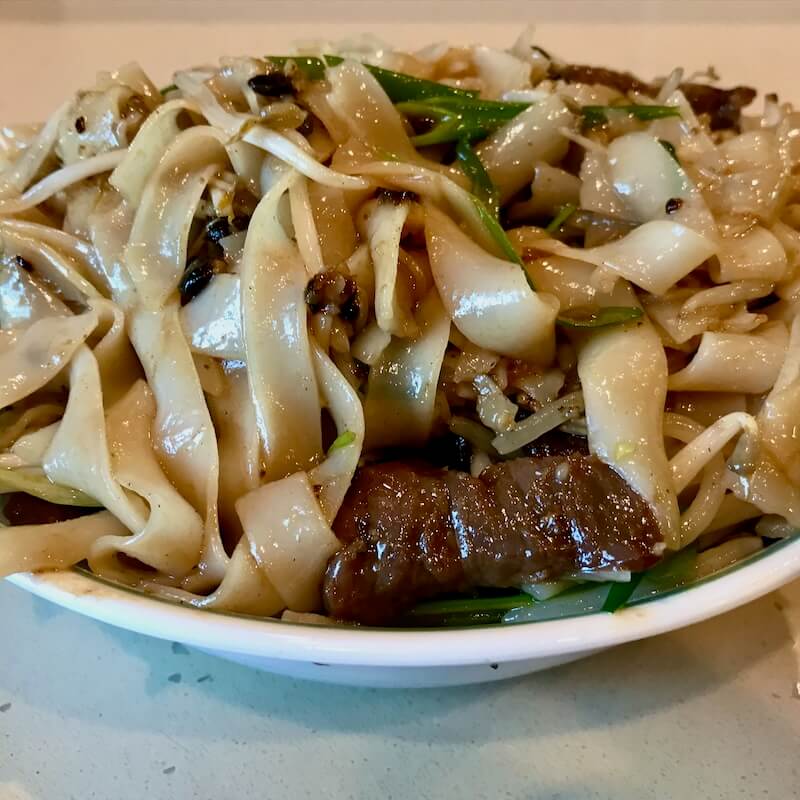
High heat is used to sear the ingredients without burning. This preserves the juicy tenderness of the beef and caramelizes the starch on the rice noodles. The actual cooking time is very short. Longer cooking times at cooler temperature will dry out the beef, and turn the vegetables into mush.
Most beef chow fun recipes call for fresh rice noodles. I don’t live near an Asian market, so I have to use dried rice noodles, and it took me a few tries to learn how to prepare these dried noodles to get a successful stir-fry.
Preparing dry rice noodles for beef chow fun
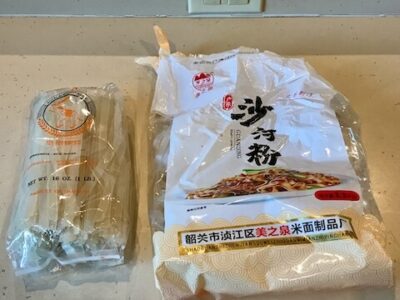
The “ho fun” noodles are a wide, flat rice noodle with a springy texture. I have seen them referred to as Guangdong ho fun noodles, and there is a similar noodle called Thai rice sticks that have the same size and texture.
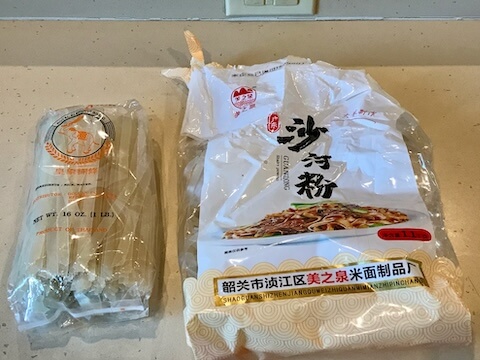
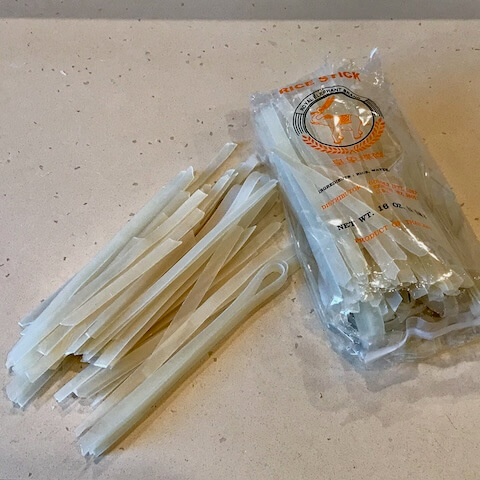
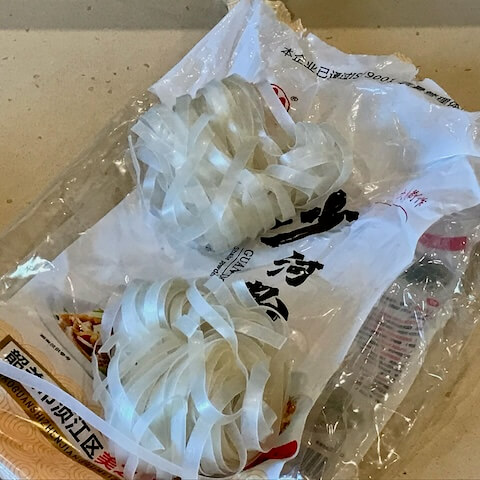
The Mala Market carries the Guangdong noodles on the right above. The Thai Rice Stick noodles (above left) are made by Royal Elephant, and available on Amazon.
For this recipe, you need 8 ounces (227 grams) of hydrated noodles. The water adds a lot of weight, so do not measure out 8 ounces of dried noodles or your wok will be filled to the brim with noodles when you try to stir-fry! Using the Mala Market’s noodles, three bundles like those shown will yield about 8 ounces once rehydrated. For the Thai rice sticks, about one-third to just under one-half of the package yields 8 ounces. Take what you need from the package, and put the remainder in a sealed zip-loc bag for storage in your pantry.
Rehydrating the dried rice noodles
As you rehydrate the dried rice noodles, the starch will be released. After boiling, this will cause the noodles to clump together. To prevent this, the noodles need to be rinsed thoroughly. Follow these steps to prepare dry rice noodles for the stir-fried beef chow fun:
- Place the noodles in a large bowl and cover with hot tap water. Leave the noodles to soak for at least 30 minutes. Set a pot of water to boil. Try to time it so the water will be boiling before you begin your stir-fry.
- Prepare your other ingredients.
- Begin your stir-fry with the aromatics and beef, and douchi (fermented soy beans). Then pour out the ingredients to a plate, and rinse any remaining bits out of the wok. Return the clean wok to high heat, and heat to smoking. While the wok is heating, drain the soaked noodles, then add them to the boiling water for 30 seconds. Do not overcook.
- Drain the noodles in a sieve, then rinse them thoroughly under cold running water. Stir the noodles with your hand to rinse all the starch off the noodles and keep them loose. Leave the noodles in the sieve to drain.
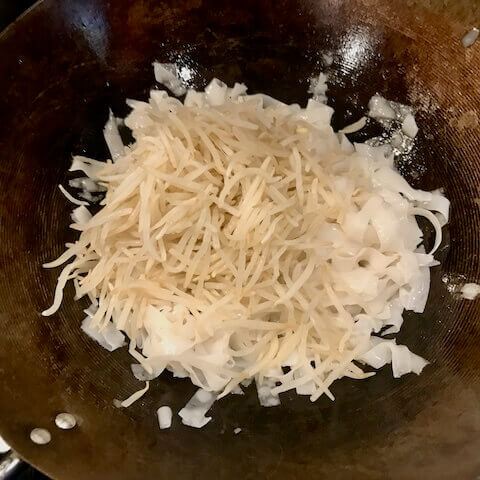
- Swirl oil in the heated wok and pour it into a heat-proof container, then add cold oil and the drained cooked noodles to the wok right away. Arrange the noodles in a single layer. Let them sear for a minute or so, until they start to get slightly crispy on the edge, then continue the rest of the stir-fry.
- Use a pair of chopsticks to toss the noodles during the stir fry.

Beef Chow Fun

Equipment
- 1 wok
- 2 mixing bowls
- 1 pair, chopsticks
- 1 4-quart or larger saucepan for boiling rice noodles
- 1 sieve
- 1 large bowl for soaking dry noodles
- 1 wok spatula
Ingredients
- 8 oz wide rice noodles (important: see notes)
- 8 oz lean beef (flank steak, top or bottom round) sliced across the grain into 5 mm (1/8 inch) thick by 50 mm (2-inch) long
- 6 oz mung bean sprouts for fancy presentation, pluck the heads and tails
- 6 green onions (about ½ cup or 118 ml by volume) cut into 2-inch lengths, then shredded
- 2 tbsp peanut oil, divided (substitute other neutral frying oil)
Aromatics
- 3 cloves garlic minced
- 6 slices fresh ginger minced (about 10 ml or two tsps)
Optional ingredients
- 1 tbsp Douchi (fermented black soybeans) crushed
- ½ small white onion slice into thin shreds
Beef marinade
- 2 tsps light soy sauce
- 2 tsps corn starch
- 1 tsp sesame oil
- ½ tsp baking soda optional, use with tougher beef to help tenderize
Sauce
- 2 tbsp oyster sauce
- 2 tbsp Shaoxing cooking wine
- 1 tbsp light soy sauce (optional)
Instructions
Preparation
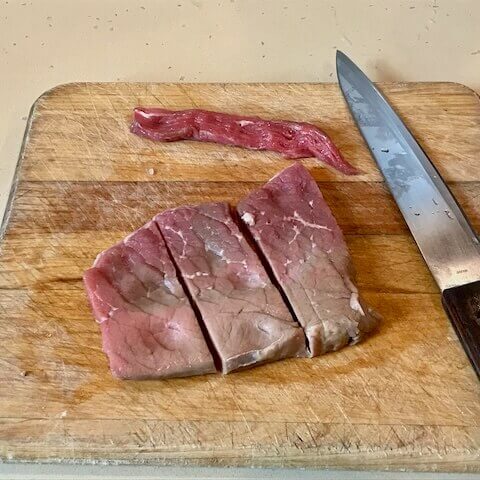
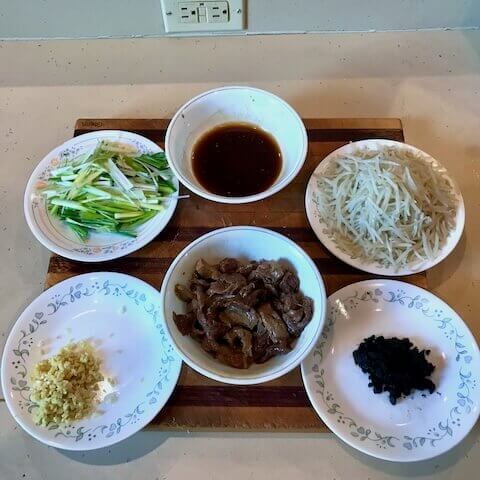
- Trim the fat from the beef. Cut the beef along the grain into strips about 2 inches (50 mm) wide. Cut across the grain into thin slices, about ⅛-inch thick (3 to 5 mm). Rinse the beef, drain, and put in a bowl.

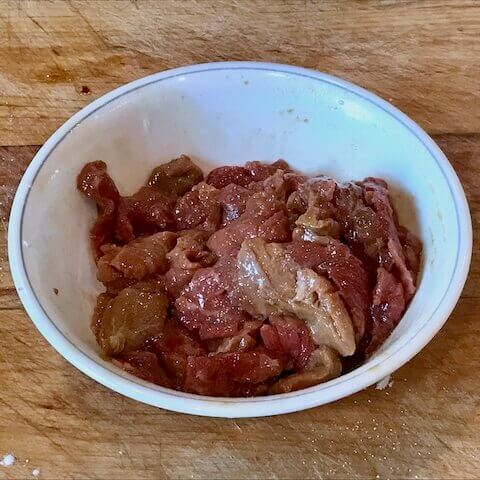
- Add cornstarch, baking soda, soy sauce, and sesame oil. Mix thoroughly to coat evenly, and set the beef aside to marinate.8 oz lean beef, 2 tsps light soy sauce , 2 tsps corn starch, 1 tsp sesame oil, ½ tsp baking soda
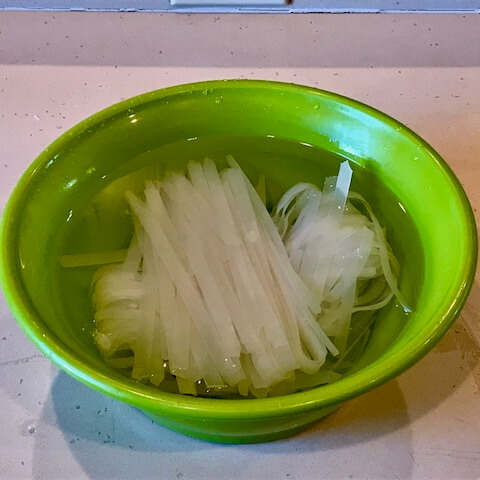
- Put the dried noodles in a large bowl and cover with hot tap water. Set aside to soak for at least 30 minutes. Add 3 quarts or liters water to a saucepan large enough to hold the noodles and bring to a rolling boil.8 oz wide rice noodles
- Measure 1 tbsp (15 ml) douchi and mash, then set aside.
- Peel, trim, and rinse the green onions. Cut into 2-3 inch (50-76 mm) lengths, then julienne these into shreds. Set them aside.
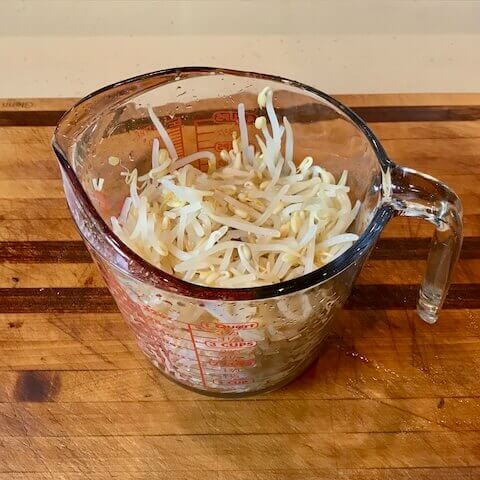
- Rinse the bean sprouts. For a fine presentation and texture, you can remove the heads and tails, but this is optional.
- Peel and mince the garlic and ginger, and set aside. If you are using white onion, peel, slice in half, and cut one half into thin slices and set aside.

Mix sauce
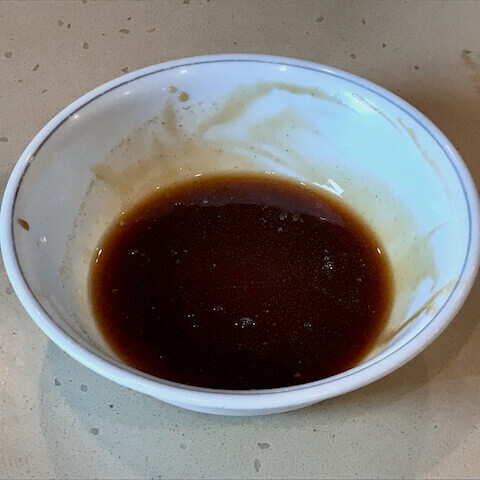
- Add oyster sauce and wine to a small bowl and mix. Optionally, add light soy sauce for a bit more salty umami flavor. Set aside.2 tbsp oyster sauce, 2 tbsp Shaoxing cooking wine , 1 tbsp light soy sauce
Stir-fry
- Heat the wok over high heat. Arrange your ingredients in the sequence you will use them, so that you can work quickly when stir-frying. When the wok starts to smoke, swirl a few tablespoons (about 50 ml) of oil in the wok, then pour off into a heat proof container.
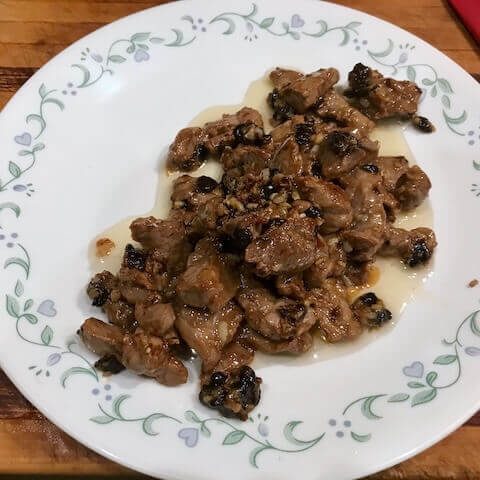
- Add 1 tbsp (15 ml) oil to the wok, then the ginger and garlic. Stir-fry quickly until fragrant, about 10-15 seconds, then push the aromatics to the side and add the beef in a single layer. Let the beef lightly sear on one side, 45 seconds to 1 minute depending on the heat of your stove.8 oz lean beef, 2 tbsp peanut oil, divided, 3 cloves garlic, 6 slices fresh ginger
- Add the douchi and stir fry 1 minute or until the beef is just pink in the center.1 tbsp Douchi (fermented black soybeans)
- Pour out the beef on a plate and set aside. Rinse out the wok, and scrub out any stuck bits if necessary. Return the wok to high heat.
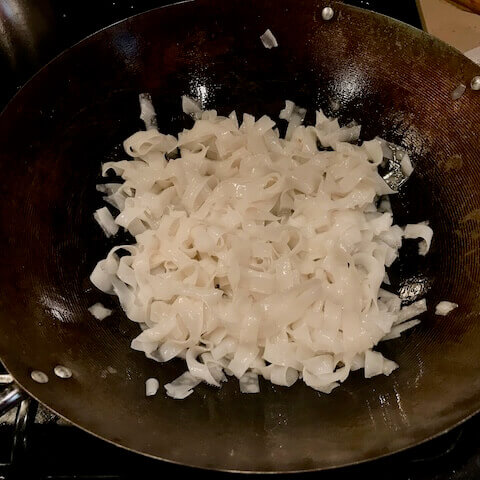
- Drain the soaked noodles and add them to the boiling water for 30 seconds. Do not overcook. Drain the noodles in a sieve and rinse thoroughly with cold tap water to remove the starch. Use your hand to stir the noodles while rinsing. When the wok starts to smoke, swirl a few tablespoons (about 50 ml) of oil in the wok, then pour off into a heat proof container.
- Add 1 tbsp (15 ml) oil to the wok, then add the noodles in a single layer in the bottom of the wok. Let them sear for a minute or so, until they are just a bit caramelized.8 oz wide rice noodles, 2 tbsp peanut oil, divided
- Add the mung bean sprouts (and optional sliced white onion) and stir-fry to combine. If you can, flip the ingredients by tossing the wok. Or use a pair of chopsticks to toss and combine the noodles and bean sprouts.6 oz mung bean sprouts, ½ small white onion
- After the bean sprouts just begin to wilt, about 1 minute, add the beef with its juices. Stir the sauce and pour it in around the sides of the wok. Stir-fry to combine until the beef is warm and just cooked.
- Add the green onions, stir-fry to combine for about 30 seconds.6 green onions
- Transfer the contents to a large bowl and serve immediately.


Notes
- Adding light soy sauce to the sauce gives a slightly saltier flavor to the finished dish.
- The fermented soybeans are optional, but give a rich umami flavor.
- The flavor of this dish comes from the interplay of the rice wine, soy sauce, oyster sauce, toasted sesame oil, and douchi (fermented soybeans)
- It’s important to sear the beef slightly, and sear the noodles slightly, to get the caramelized taste. Don’t burn or overcook. Lightly browned is good.
- The wok has to be well-seasoned. Use a seasoned wok, heat to smoking, then swirl a few tablespoons of oil and pour off. Then add 1 tbsp (15 ml) of cold oil, the aromatics, then the beef. After you finish the beef, rinse the wok and use a nylon scrubber to remove any stuck bits. Return the wok to heat, bring to smoking and repeat the process of swirling oil, then pouring off, then adding 1 tbsp (15 ml) oil before adding the noodles.
- Swirling oil to season, then pouring off, then adding cold oil is important. Always add cold oil to a hot wok (carbon steel, or cast iron). Adding minced aromatics to hot oil will cause them to burn and char instantly.
- If using dry noodles that have been boiled, be sure to rinse thoroughly after boiling (see below).
Dry rice noodles
Beef Chow Fun is made with “ho fun” wide rice noodles. Most Chinese recipes call for fresh noodles. If, like me, you do not live near an Asian market, dry noodles are the only option. After a bit of practice, I’ve learned how to get good results with dried noodles:- Use Guangdong Ho Fun from the Mala Market, or substitute Thai wide “rice stick” noodles.

Image Credit: Glenn Emerson for My Chinese Home Kitchen, 2024. - The recipe needs 8 ounces (227 grams) of noodles by weight, but this is hydrated, not dry. Do not weigh out 8 ounces of dry noodles! If using the Guangdong noodles from Mala Market, use 3 bundles. If using the Thai rice stick noodles, use 1/3 to a little less than 1/2 of a bag.
- Soak the noodles, submersed, in hot tap water for at least 30 minutes. Then drain them and add to boiling water for 30 seconds.
- Important: Drain the boiled noodles into a sieve, and rinse thoroughly under cold running water, stirring with your hand, to remove the starch and keep the noodles from sticking together in a clump. Don’t skip this step or you’ll have clumped blobs of noodles when you try to stir-fry.
Nutrition
Do you enjoy My Chinese Home Kitchen?
We enjoy sharing these authentic home recipes with you. My Chinese Home Kitchen is a labor of love.
Please tell your friends about us!
Learn more about My Chinese Home Kitchen at our About page.
Please leave a comment, or SUBSCRIBE to our newsletter.
For more of our original videos, visit My Chinese Home Kitchen on YouTube and Rumble.


This dish is a favorite in our home!