

The local restaurants near me use the green part of the green onion or scallion for a garnish, but they cut off and discard the white part. Did you know you can re-grow green onions from these bottoms? It’s called propagation. If you take the root portion and put it in water until new shoots start to appear, you can transplant the sprout and it will grow a new plant!

Most of our recipes that use green onions or scallions use the whole plant. So, there’s not much left to work with for propagation. However, if you know any local restaurant owners, you can do like I did. Ask them if you can have their discards. It is a small bit of work to grow my own, but the flavor is unbeatable. The onions I buy in the grocery have been cut and shipped, and often the leaves are starting to wilt. The plant fresh from my container garden is full of flavor, vitamins, and nutrients.
Re-growing Green Onions
Equipment
- 1 container of suitable size (You can use a plant pot and grow indoors, or a container, such as a 5-gallon bucket or livestock lick tub to plant several bunches. )
- 1 can of paint primer optional
- 1 can of bright paint optional
- 1 drill with large twist bit
Materials
- potting soil (enough to fill the container of choice)
- gardening compost (to mix with potting soil and mulch around celery)
- plant fertilizer
- green onion root cuttings
Instructions
Start the green onions:
- Cut the green onion about 2 to 3 inches above the root.
- Place the green onion in container with water covering the roots.

- When sprouts and new roots begin to appear, it is time to transplant the green onions.


Prepare the container:
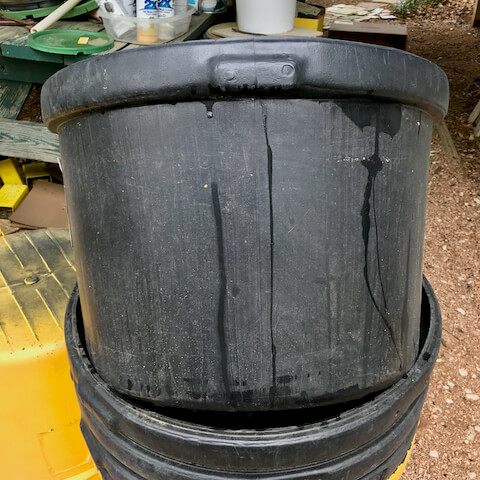
- I like to use discarded "lick tubs" used to provide range cattle with mineral blocks. These are easy to find at the town dump.
- Clean the container inside and out.
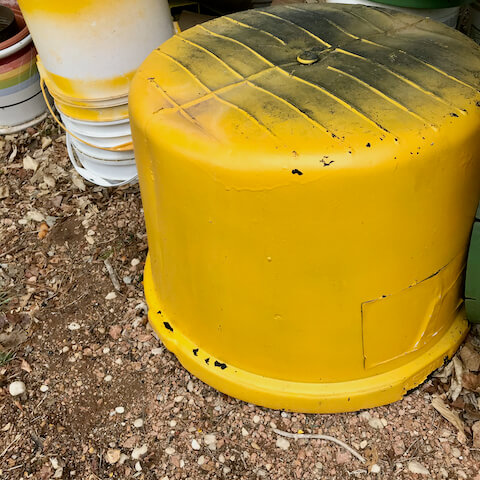
- Here in Texas, we get some days in excess of 100 degrees, so I like to paint my containers with a bright, reflective color, as the black tubs will absorb too much heat from the sun. Spray the outside with a coat of primer, such as Rustoleum, and let dry overnight. Spray over the primer with the finish color. Let dry over night. Add a second coat if desired.
- When the container is painted, turn it upside down and drill several holes in the bottom for drainage.
- A large container, like a lick tub, can hold 100 lbs of soil, making it too heavy to move without breaking the tub. So I fill the bottom with empty plastic milk jugs lying on their sides. This keeps the bottom third free of soil, and promotes drainage. The plant roots will not grow this deep anyway, so filling a tub of this size with soil just adds weight and cost without productive value.
- Add potting soil, or a compost and soil mix.
Transplant the green onions
- Make a hole in the soil wide enough and deep enough to hold the root portion and bulb, but do not plant too deep. Place them about 2 inches apart.
- Keep the soil moist but not wet. Water frequently. Fertilize every two weeks.
- Mulch around the plants to help keep the soil moist.
- You can begin to harvest when stems reach 6 inches. You can either snip the green stem and leave the roots to grow a new stem, or you can pull the whole plant.

Notes
- Green onions have shallow roots. Do not soak the soil, but keep it moist. Too much water will cause mold and rot.
Do you enjoy My Chinese Home Kitchen?
We enjoy sharing these authentic home recipes with you. Learn more about My Chinese Home Kitchen at our About page.
Please leave a comment, or SUBSCRIBE to our newsletter.
For more of our original videos, visit My Chinese Home Kitchen on YouTube and Rumble.


Good idea to ask many restaurants